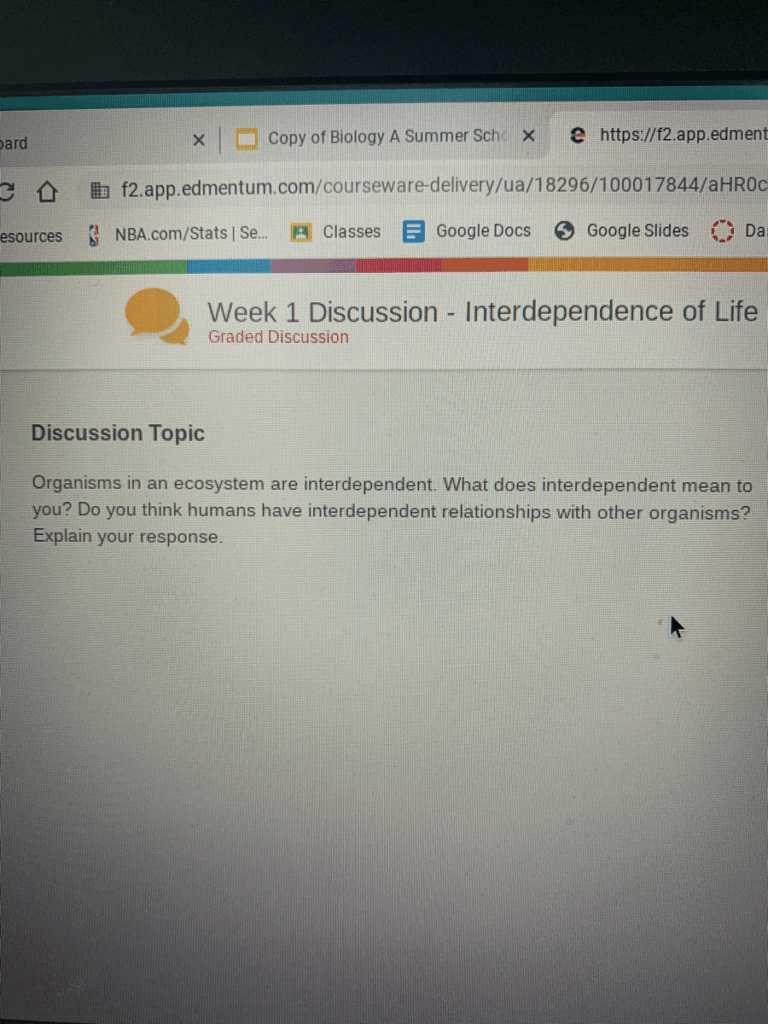
Organisms in an ecosystem are interdependent. What does interdependent mean to you? Do you think humans have interdependent relationships with other organisms? Explain your response.
The Correct Answer and Explanation is:
Here is a sample response that answers the discussion topic clearly and thoroughly in about 300 words:
What Does Interdependent Mean to You?
To me, interdependent means that living things rely on each other to survive and thrive. In an ecosystem, no organism lives completely alone or without any connection to others. Everything is part of a larger system where the actions or health of one species can impact others. For example, plants need sunlight, water, and nutrients from the soil, but they also depend on animals like bees to help them pollinate. In return, animals depend on plants for food and oxygen.
Do Humans Have Interdependent Relationships With Other Organisms?
Yes, absolutely. Humans have many interdependent relationships with other organisms. One major example is with plants and trees. We depend on them to produce oxygen through photosynthesis, and they need the carbon dioxide we exhale. We also rely on animals for food, clothing, and other resources. Even tiny microorganisms in our gut help us digest food and keep us healthy. Without them, we would get sick more often.
Another example is how bees pollinate many of the crops we eat, like fruits, vegetables, and nuts. If bees were to disappear, it would affect our entire food supply. This shows how deeply connected humans are to other species—even ones we don’t always notice.
Conclusion
Interdependence means mutual reliance, and it is a fundamental part of life on Earth. Humans are not separate from nature; we are a part of it. Our health, survival, and even our economy depend on ecosystems staying balanced. When one part of that system is damaged, it can have serious effects on everything else, including us. That’s why it’s so important to understand and respect our role in the web of life.

.