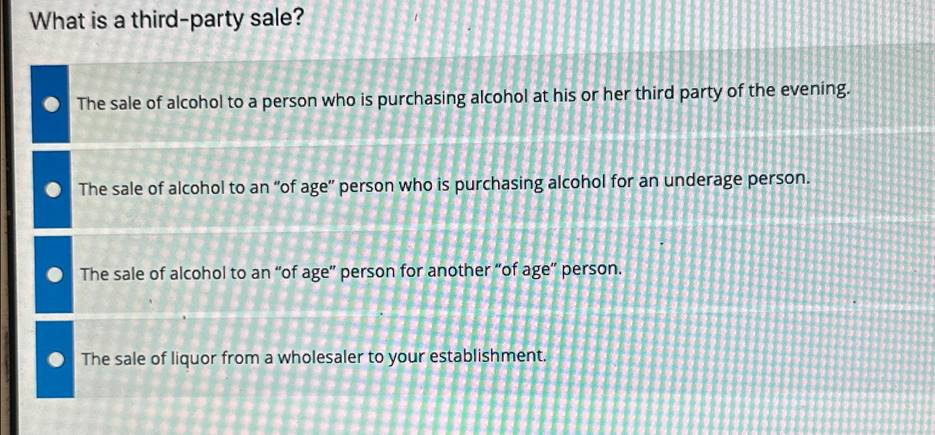
What is a third-party sale?
The sale of alcohol to a person who is purchasing alcohol at his or her third party of the evening.
The sale of alcohol to an “of age” person who is purchasing alcohol for an underage person.
The sale of alcohol to an “of age” person for another “of age” person.
The sale of liquor from a wholesaler to your establishment.
The Correct Answer and Explanation is:
Correct Answer:
The sale of alcohol to an “of age” person who is purchasing alcohol for an underage person.
Explanation:
A third-party sale refers to a situation where alcohol is legally sold to someone who is of legal drinking age, but that person intends to provide the alcohol to someone who is not of legal age. This is often referred to as a “proxy sale” and is illegal in most jurisdictions, as it undermines laws that are meant to prevent underage drinking.
Here’s how it works: A person who is over the legal drinking age (typically 21 in the U.S.) buys alcohol with the intent to give it to a minor (someone under the legal drinking age). While the seller (e.g., bartender or liquor store clerk) may not directly sell to the underage person, they are still responsible if it’s clear that the purchase is being made for an underage individual. This includes situations where the underage person is present and involved in the transaction, or where there’s evidence that the alcohol will be handed off to them.
From a legal and ethical standpoint, it is critical for alcohol vendors to identify and refuse third-party sales. Many alcohol training programs emphasize recognizing the signs of such sales and intervening appropriately. This helps prevent potential liabilities, legal consequences, and tragic incidents involving underage drinking.
The other options provided in the question are either misleading or incorrect:
- A person buying alcohol at their third party of the evening is irrelevant to the concept.
- An “of age” person buying for another “of age” person is legal and not a third-party concern.
- Sales from wholesalers to establishments are part of normal supply chain logistics, not related to third-party sales.
Preventing third-party sales is a crucial component of responsible alcohol service.