Exhibits the phenomenon of molting has a mantle and an open circulatory system have a coelom and a closed circulatory system has an endoskeleton made of calcium-rich plates
The Correct Answer and Explanation is:
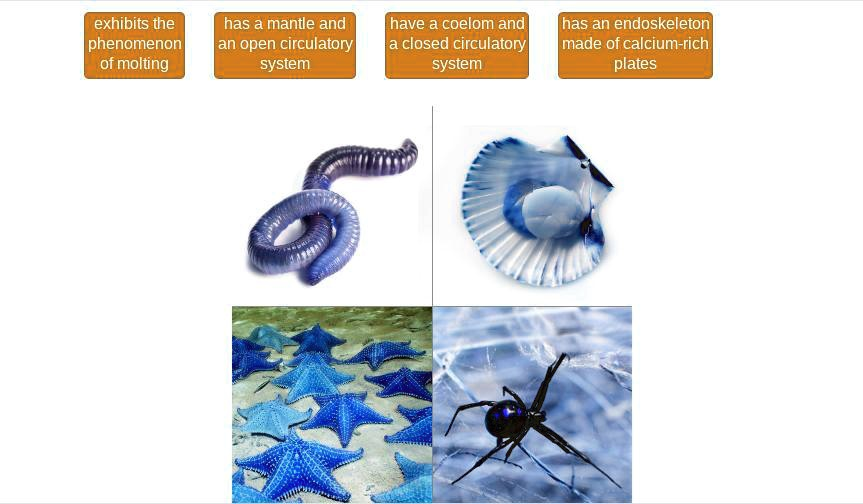
The image displays different marine organisms and characteristics associated with various animal phyla. Here is the correct matching between the characteristics and the organisms:
- Exhibits the phenomenon of molting → Spider (bottom right)
- Has a mantle and an open circulatory system → Mollusk (top right)
- Have a coelom and a closed circulatory system → Earthworm (top left)
- Has an endoskeleton made of calcium-rich plates → Starfish (bottom left)
Explanation
Animal phyla can be differentiated based on structural and physiological characteristics. Let’s analyze each organism in the image:
- Spider (Arthropod): Spiders belong to the phylum Arthropoda. A defining trait of arthropods is the presence of an exoskeleton made of chitin, which they must shed periodically to grow — a process called molting or ecdysis. This molting enables them to increase in size and is controlled by hormones.
- Mollusk (e.g., Clam or Shellfish): This animal represents the phylum Mollusca. Mollusks typically have a mantle, a specialized tissue that secretes the shell in many species. They also have an open circulatory system, where blood is not always enclosed in vessels but flows into open spaces (hemocoel), except for cephalopods like squids and octopuses.
- Earthworm (Annelid): The earthworm belongs to the phylum Annelida. Annelids have a coelom, a fluid-filled body cavity completely lined by mesoderm. They also possess a closed circulatory system, where blood circulates within vessels throughout the body, facilitating efficient nutrient and gas exchange.
- Starfish (Echinoderm): Starfish are part of the phylum Echinodermata. They have an endoskeleton made of calcium-rich plates called ossicles. This internal skeleton provides structural support and protection. Echinoderms also exhibit radial symmetry and a unique water vascular system used for locomotion and feeding.
Each of these traits reflects adaptations suited to the animal’s environment and biological needs. Understanding these distinctions helps categorize and study biodiversity effectively.
