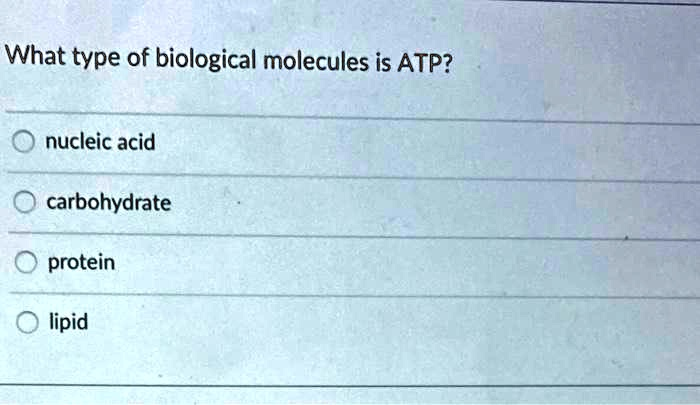
What type of biological molecules is ATP? nucleic acid carbohydrate protein lipid
The Correct Answer and Explanation is:
ATP, or adenosine triphosphate, is classified as a nucleic acid. More specifically, it is a nucleotide, which serves as a fundamental unit for nucleic acids such as DNA and RNA. ATP consists of three essential components: adenine, a nitrogenous base; ribose, a five-carbon sugar; and three phosphate groups. These phosphate groups play a critical role in energy storage and transfer within cells.
ATP functions as the primary energy carrier in biological systems. It is often referred to as the energy currency of the cell because it provides the necessary energy for various cellular processes. When a cell requires energy, ATP undergoes hydrolysis, breaking down into adenosine diphosphate (ADP) and inorganic phosphate. This reaction releases energy that cells utilize for processes such as muscle contraction, active transport across membranes, and biosynthesis of macromolecules.
Cells generate ATP through multiple pathways. The most significant process is oxidative phosphorylation, which occurs in the mitochondria during cellular respiration. Additionally, ATP is produced through glycolysis and the citric acid cycle in the cytoplasm. In plants, ATP is synthesized in chloroplasts during photosynthesis, enabling energy storage for metabolic activities.
Beyond its role in energy transfer, ATP participates in signal transduction and enzyme regulation. It acts as a substrate for kinases, enzymes that phosphorylate other molecules, influencing cellular signaling pathways. ATP is also essential in nucleic acid synthesis, contributing phosphate groups to the formation of RNA and DNA.
The versatility of ATP makes it indispensable for life. Its involvement in energy transfer, molecular synthesis, and intracellular signaling highlights its importance in maintaining biological function. Without ATP, cells would be unable to perform essential activities, leading to metabolic failure and compromised survival.
