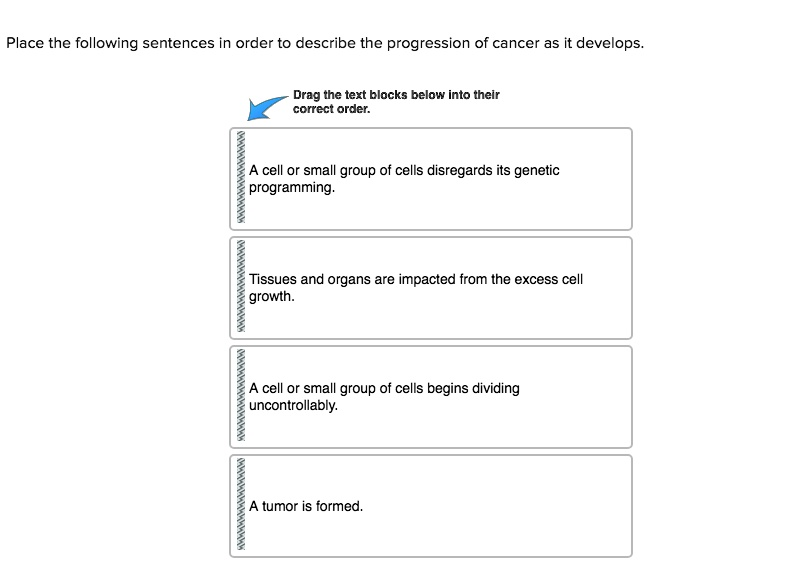
Place the following sentences in order to describe the progression of cancer as it develops_ Drag the text blocks below into their corect order: cell or small group of cells disregards its genetic programming: Tissues and organs are impacted from the excess cell growth: A cell or small group of cells begins dividing uncontrollably: tumor is formed;
The Correct Answer and Explanation is:
The correct order of sentences to describe cancer progression is:
- A cell or small group of cells disregards its genetic programming.
- A cell or small group of cells begins dividing uncontrollably.
- A tumor is formed.
- Tissues and organs are impacted from the excess cell growth.
Cancer begins at the cellular level when a normal cell loses control over its genetic programming. Healthy cells follow precise instructions encoded in their DNA that regulate growth, division, and programmed death. However, genetic mutations can disrupt these mechanisms, leading to uncontrolled proliferation.
Once a cell stops responding to regulatory signals, it begins dividing rapidly without the usual checks and balances. Normally, cells divide in a controlled manner to replace old or damaged tissue, but cancer cells bypass these regulations. This unchecked division leads to clusters of abnormal cells multiplying continuously.
Over time, these dividing cells accumulate and form a tumor. Tumors can be benign, meaning they remain localized and do not spread, or malignant, meaning they invade nearby tissues and have the potential to metastasize. The ability of malignant tumors to spread is a defining characteristic of cancer and contributes to its severity.
As the tumor enlarges, it begins to interfere with the function of tissues and organs. It can compress healthy structures, disrupt blood supply, and alter normal biochemical processes. Additionally, cancer cells may release harmful substances that promote inflammation or further growth, leading to systemic complications. The progression of cancer affects the body’s ability to maintain normal physiological functions, often resulting in severe health consequences.
Understanding how cancer develops is crucial for creating effective treatments. By identifying mutations early, researchers and physicians can design targeted therapies to block uncontrolled cell division, slow tumor growth, and mitigate damage to vital organs.