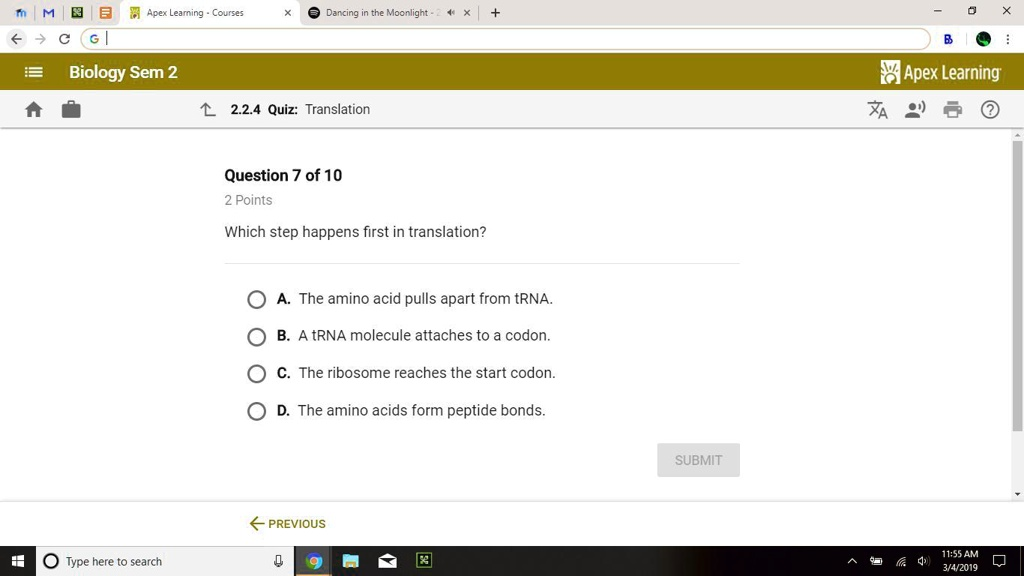
Translation Question 7 of 10 2 Points Which step happens first in translation? A. The amino acid pulls apart from tRNA. B. A tRNA molecule attaches to a codon. C. The ribosome reaches the start codon. D. The amino acids form peptide bonds.
The Correct Answer and Explanation is:
The correct answer is C. The ribosome reaches the start codon.
Translation is the process by which ribosomes synthesize proteins based on the genetic instructions encoded in mRNA. This process occurs in three main stages: initiation, elongation, and termination. Initiation is the first and most crucial phase, as it sets the foundation for the accurate synthesis of a protein.
During initiation, the small ribosomal subunit binds to the mRNA strand and begins scanning for the start codon, which is usually AUG. This codon signals the beginning of protein synthesis and ensures that translation starts at the correct location. Once the ribosome identifies the start codon, the initiator tRNA carrying methionine binds to it, marking the first step toward protein formation.
After initiation, the process moves into elongation, where additional tRNA molecules bring amino acids to the ribosome. The amino acids are linked by peptide bonds, forming a growing polypeptide chain. The ribosome facilitates this process by continuously moving along the mRNA strand, decoding each codon and assembling the appropriate sequence of amino acids.
Termination occurs when the ribosome encounters a stop codon, which signals the end of protein synthesis. The newly formed protein is released from the ribosome, allowing it to fold into its functional structure and carry out biological tasks within the cell.
Understanding the initiation phase is essential because it ensures the accuracy of translation and prevents errors in protein synthesis. If translation does not begin at the correct start codon, the resulting protein could be nonfunctional or harmful to the cell. The ribosome reaching the start codon is the first key event in translation, establishing the proper foundation for subsequent steps in protein synthesis.