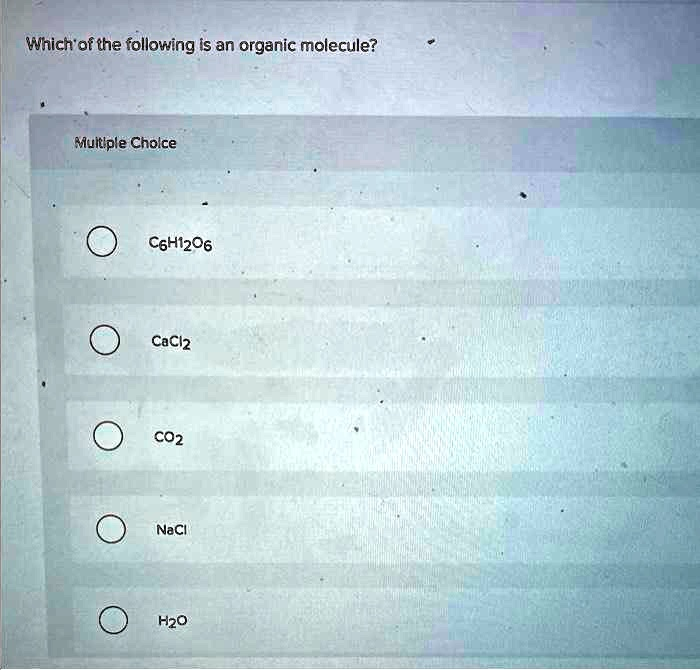
Which of the following is an organic molecule? Multiple Choice C
H
O
CaCl
CO
NaCl H
O
The Correct Answer and Explanation is:
The correct answer is C₆H₁₂O₆.
An organic molecule is defined in chemistry as a complex chemical compound that contains carbon atoms bonded to other elements, most notably hydrogen. The presence of carbon-hydrogen (C-H) bonds is a key characteristic of most organic compounds, which form the foundation of all life on Earth. These molecules can range from simple structures like methane (CH₄) to incredibly complex ones like DNA.
Examining the options provided, C₆H₁₂O₆ is the only one that fits this definition. This chemical formula represents a class of simple sugars called hexoses, which includes glucose, fructose, and galactose. These molecules have a backbone of six carbon atoms covalently bonded to hydrogen and oxygen atoms. Glucose, for example, is a fundamental source of energy for cellular processes and a building block for larger carbohydrates, making it a classic example of an organic molecule.
The other choices are classified as inorganic. CaCl₂ (calcium chloride) and NaCl (sodium chloride) are inorganic salts. They are ionic compounds and, most importantly, they do not contain any carbon atoms. Similarly, H₂O (water), while essential for life, is an inorganic molecule because it lacks carbon.
The case of CO₂ (carbon dioxide) is a common point of discussion. Although it contains carbon, it is conventionally considered an inorganic compound. The primary reason is its simplicity and the absence of carbon-hydrogen bonds. Its properties are more aligned with other inorganic substances. By convention, simple carbon oxides, carbonates, and cyanides are treated as inorganic. Therefore, C₆H₁₂O₆ is the only true organic molecule listed.