Beetle Spider A Spider B Spider C Leafhopper Grasshopper Leafhopper Bug Grasshopper Beetle Bug Competition for food among herbivorous insects Herbs Meadow food web Q5.9. Imagine all the Grasshoppers are removed and excluded from a large area of the meadow ecosystem. Which of the following predictions is LEAST likely to occur, according to the diagrams? Spider B will go extinct. The Spider C population size will decrease. The Beetle population size will increase. The diagrams indicate that all of the above are equally likely.
The Correct Answer and Explanation is:
Based on the provided diagrams, the correct answer is that Spider B will go extinct is the least likely prediction to occur.
Here is a detailed explanation:
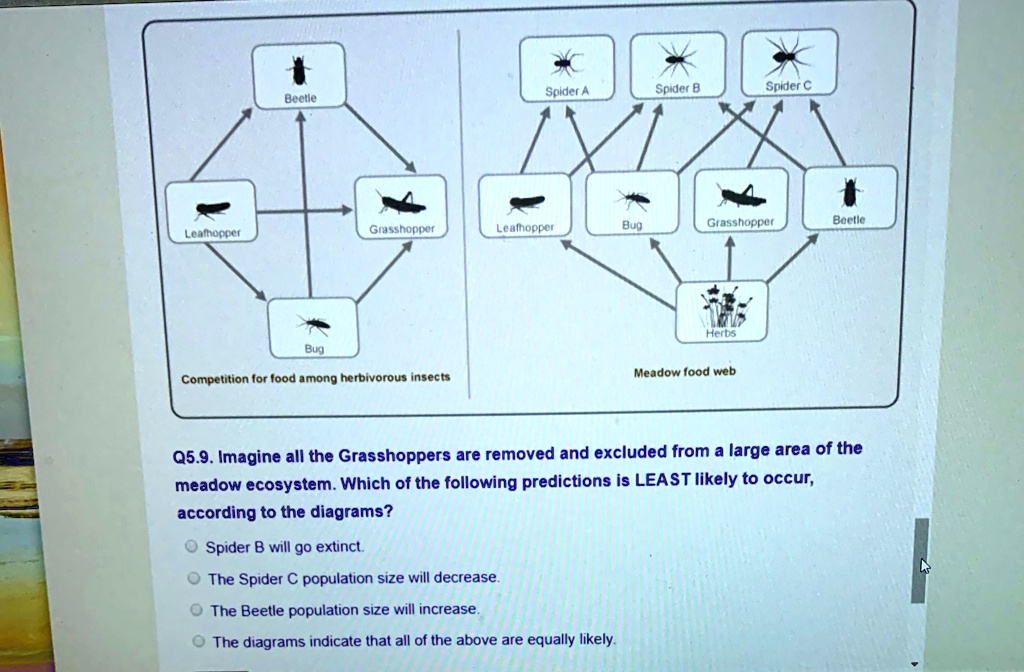
The “Meadow food web” diagram illustrates the feeding relationships within this ecosystem. If all the grasshoppers are removed, we must analyze the resulting impact on the other species.
- Impact on Herbivores: Grasshoppers, leafhoppers, bugs, and beetles all compete for the same food source: herbs. Removing grasshoppers eliminates a major competitor. With fewer insects eating the herbs, the populations of leafhoppers, bugs, and beetles are likely to increase due to the greater availability of food. Therefore, the prediction that “The Beetle population size will increase” is a very likely outcome.
- Impact on Predators: The spiders in this ecosystem are predators that feed on the herbivorous insects.
- Spider C: According to the diagram, Spider C feeds on grasshoppers and beetles. The removal of grasshoppers eliminates one of its two food sources. While the beetle population may increase, the loss of a significant food source makes it very likely that the Spider C population will face challenges, leading to a decrease in its size. Thus, the prediction that “The Spider C population size will decrease” is also likely.
- Spider B: Spider B has a more diverse diet, feeding on leafhoppers, bugs, and grasshoppers. When grasshoppers are removed, Spider B loses one of its three food sources. However, the populations of its other two food sources, leafhoppers and bugs, are expected to increase due to reduced competition from grasshoppers. This increase in alternative prey would likely compensate for the loss of grasshoppers, allowing the Spider B population to remain stable or even grow.
Considering these points, the extinction of Spider B is the least likely event. Extinction is an extreme outcome, and Spider B is well-positioned to adapt to the change because of its varied diet and the probable increase in its remaining food sources. A population decrease for Spider C and a population increase for the beetle are both much more probable consequences of removing the grasshoppers.