Label the anatomical features of a tooth by clicking and dragging the labels to the correct location. Neck Pulp cavity Gingival sulcus Cementum Enamel Periodontal ligament Root canal Bone Root Dentin Gingiva Crown
The Correct Answer and Explanation is:
Here is the correctly labeled image:
Explanation of Tooth Anatomy
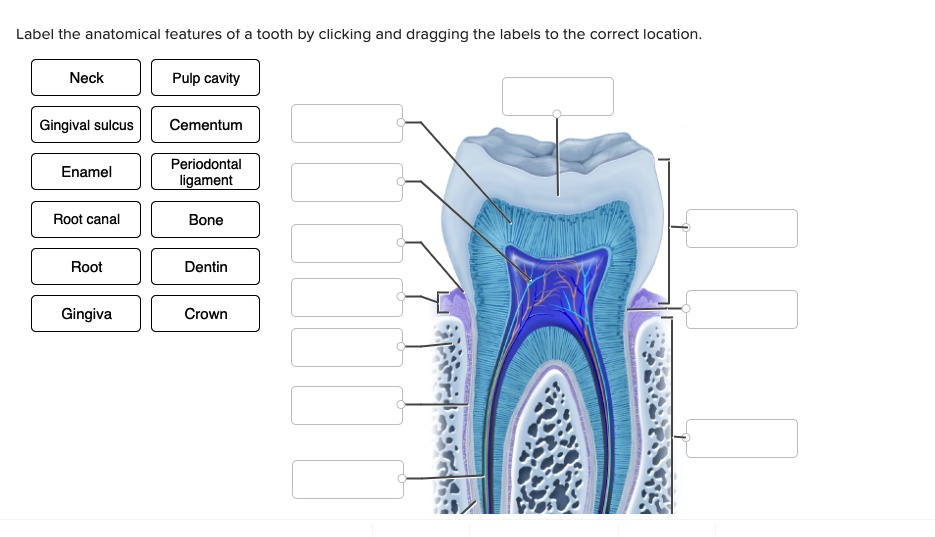
A tooth is a complex structure composed of several specialized tissues, each with a specific function. Understanding its anatomy is key to appreciating oral health. The tooth is generally divided into three main regions. The Crown is the visible part of the tooth that protrudes above the gum line and is used for chewing. The Root is the portion embedded within the jawbone, anchoring the tooth. The Neck is the constricted region where the crown and root meet, located at the gum line.
The crown is covered by Enamel, the hardest and most mineralized substance in the body. Enamel protects the tooth from wear and tear and decay. Beneath the enamel is the Dentin, a hard, yellowish tissue that forms the main bulk of the tooth. Dentin is less mineralized than enamel and contains microscopic tubules that can transmit sensations like pain if the protective enamel is lost.
At the center of the tooth is the Pulp cavity, which houses the pulp. This soft tissue contains nerves, blood vessels, and connective tissue that provide nourishment and sensation to the tooth. The pulp cavity extends down through the root in a narrow channel called the Root canal.
The root is covered by Cementum, a bone like tissue that is softer than enamel and dentin. The Periodontal ligament, a collection of specialized connective tissue fibers, attaches the cementum to the alveolar Bone of the jaw socket. This ligament holds the tooth firmly in place while also acting as a shock absorber during chewing.
The soft tissue surrounding the teeth is the Gingiva, commonly known as the gums. The small space or groove between the surface of the tooth and the free gingiva is the Gingival sulcus. Maintaining the health of all these structures is essential for a functional and lasting smile.