The Correct Answer and Explanation is:
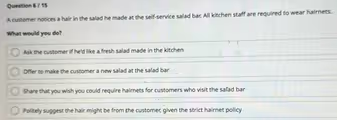
The correct answer is: Ask the customer if he’d like a fresh salad made in the kitchen.
This response is the most appropriate and professional choice for several key reasons centered on excellent customer service and problem resolution. The primary goal in this situation is to acknowledge the customer’s unpleasant discovery, validate their concern, and provide a swift, satisfactory solution that restores their confidence in the establishment.
Offering a fresh salad made in the kitchen directly accomplishes this. It immediately provides a superior alternative, moving the preparation to a controlled environment away from the self-service area where the issue occurred. This action shows the business takes food safety and customer satisfaction seriously. It is a proactive and positive gesture that turns a negative experience into a positive one without assigning blame. Whether the hair came from staff, another customer, or the customer themselves is irrelevant; the priority is resolving the problem for the guest.
The other options are flawed. Offering to make a new salad at the same salad bar might not reassure the customer, as the source of the contamination could still be present in the ingredients on the bar. Suggesting that customers should wear hairnets is an unprofessional complaint that deflects responsibility and does nothing to help the current situation. The worst option is to suggest the hair might belong to the customer. This is accusatory, defensive, and will almost certainly escalate the customer’s frustration, potentially losing their business permanently.
In hospitality, taking ownership of the guest’s experience, even in a self-service context, is crucial. By offering a kitchen-prepared meal, you apologize through action, provide a high quality solution, and demonstrate a commitment to your patrons’ well being.