The Correct Answer and Explanation is:
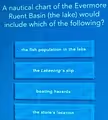
The correct answer is boating hazards.
A nautical chart is a specialized map designed specifically for marine navigation. Its primary purpose is to ensure the safety of a vessel and its crew by providing essential information about a body of water. While various details can be included, the most critical function is to identify potential dangers.
The inclusion of boating hazards is fundamental to any nautical chart. This information allows a mariner to plot a safe course, avoiding obstacles that could damage the vessel or endanger its occupants. Examples of such hazards include submerged rocks, shallow areas known as shoals, shipwrecks, strong currents, and other obstructions. Without this crucial data, navigating any body of water, from a vast ocean to a lake like the Evermore Ruent Basin, would be exceptionally risky. Therefore, boating hazards are a guaranteed and essential component of the chart.
The other options are incorrect for specific reasons. Information on fish populations would be found on a fish finder map or in an ecological survey, not a navigational chart. The location of a store is terrestrial information more suited for a road map or a tourist guide. While a specific feature like “the Catherine’s slip” (a place to dock a boat) might appear on a detailed harbor chart as a landmark, the general category of “boating hazards” is a more universal and critical element for all nautical charts. The chart’s core mission is safety through navigation, making the identification of hazards its most defining characteristic among the choices given.