The Correct Answer and Explanation is:
Based on the provided worksheet, here are the correct answers and a detailed explanation.
Answer to Question 14: The type of energy that cellular respiration provides to all organisms is ATP (Adenosine Triphosphate).
Answer to Question 15: Organisms obtain this energy through the process of cellular respiration. Autotrophs (like plants) create their own fuel (glucose) for this process through photosynthesis, while heterotrophs (like animals) must consume other organisms to obtain glucose.
Explanation
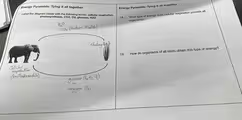
The diagram illustrates the fundamental cycle of energy and matter between two major groups of organisms: producers and consumers. The key to understanding this relationship lies in the processes of photosynthesis and cellular respiration.
Cellular respiration is the metabolic process that provides usable energy for all of an organism’s life functions. The primary form of this energy is a molecule called Adenosine Triphosphate, or ATP. Think of ATP as the universal energy currency for cells. The chemical energy stored in the bonds of food molecules like glucose is too large for cells to use directly for most work. Cellular respiration efficiently converts the energy from glucose into the smaller, more accessible packets of energy stored in ATP. Cells then use ATP to power everything from muscle contractions and nerve impulses to building new proteins and DNA.
All living organisms, from the smallest bacteria to the largest animals like the elephant, must perform cellular respiration to generate the ATP they need to survive. The way they obtain the fuel for this process, glucose, is what separates them.
- Autotrophs (Producers): Organisms like the plant shown in the diagram are autotrophs. They can produce their own food. Using energy from sunlight, they perform photosynthesis, a process that converts carbon dioxide and water into glucose (food) and oxygen. This self-made glucose is then used in their own mitochondria to fuel cellular respiration and produce ATP.
- Heterotrophs (Consumers): Organisms like the elephant are heterotrophs. They cannot make their own food and must obtain energy by consuming other organisms. The elephant eats plants to get glucose and other organic molecules. This ingested glucose then travels to its cells, where it is used in cellular respiration, along with inhaled oxygen, to produce the vast amounts of ATP needed to power its large body.