The Correct Answer and Explanation is:
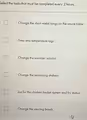
Based on standard food safety protocols, the correct answers are “Change the short-ended tongs in the steam table” and “Change the sanitizer solution.”
These two tasks are critical, time-sensitive procedures in a food service environment, designed to prevent the growth of harmful bacteria and minimize the risk of foodborne illness.
Changing serving utensils, such as tongs in a steam table, every two hours is a vital practice to prevent cross-contamination. Steam tables hold food at warm temperatures, and while the goal is to keep food outside the temperature danger zone (41°F to 135°F), the handles of utensils are touched frequently by staff. Furthermore, the food-contact portion of the tongs can cool down, creating an environment where bacteria can multiply. Regularly replacing these utensils with clean, sanitized ones breaks this potential chain of contamination. This ensures that any bacteria transferred to the tongs from hands or the environment are removed before they can multiply to dangerous levels and contaminate the food.
Similarly, changing the sanitizer solution is crucial for maintaining a safe and clean kitchen. Sanitizer, typically a mixture of water and a chemical concentrate, loses its effectiveness over time. As utensils and equipment are washed, the solution becomes diluted and contaminated with food debris and organic matter. This soil load can neutralize the active sanitizing agent, rendering it useless. To ensure the solution remains at the proper concentration to effectively kill pathogens, health codes mandate that it be changed on a regular schedule, often every two to four hours, or sooner if it becomes visibly dirty. A two-hour replacement schedule is a proactive measure to guarantee its potency.
The other options listed are incorrect because they are not time-sensitive safety tasks. Temperature logs are for recording data, not for swapping. Restocking and changing brushes are done as needed, not on a strict two-hour safety clock.