Sh
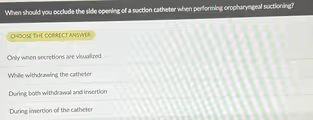
The Correct Answer and Explanation is:
he correct answer is While withdrawing the catheter.
This technique is a critical standard of care in respiratory therapy and nursing to ensure patient safety and procedural effectiveness. The side opening on a suction catheter is a control vent. When it is uncovered, suction is not applied at the catheter tip. Covering this port with your thumb occludes it, creating negative pressure to aspirate secretions.
The primary reason for applying suction only during withdrawal is to prevent injury to the patient’s delicate mucosal tissues. If suction were applied while inserting the catheter, the tip could adhere to the lining of the mouth and pharynx. This can cause trauma, leading to bleeding, inflammation, and significant discomfort. It can also increase the risk of infection by creating a break in the protective mucosal barrier.
Furthermore, applying suction during insertion unnecessarily removes oxygen from the patient’s airway for a longer duration. Suctioning removes air along with secretions, which can lead to hypoxemia, a potentially dangerous drop in blood oxygen levels. By waiting to apply suction until the catheter is being withdrawn, the duration of oxygen removal is minimized.
The correct procedure is to gently insert the catheter to the required depth without suction. Once in position, occlude the side port to begin suction and immediately start withdrawing the catheter, typically using a rotating motion to clear secretions from all surfaces. Each suction attempt should be limited to 10 to 15 seconds to further reduce the risk of hypoxemia and tissue damage. This method ensures that secretions are removed efficiently while prioritizing the patient’s safety and comfort.