The Correct Answer and Explanation is:
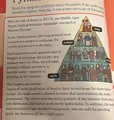
Based on the image provided, the correct answer is that the diagram illustrates the structure of feudalism, the dominant social and political system in Europe during the Middle Ages.
This system organized society into a rigid hierarchy, visually represented by the pyramid. At the very top was the king, who theoretically owned all the land in the kingdom. The king granted large portions of this land, known as fiefs, to his most powerful nobles, who are shown on the second tier as lords and barons. In return for this land, the lords pledged their loyalty and promised to supply the king with soldiers in times of war. These nobles built castles to control their territory and secure it for the crown.
The next level down consisted of vassals and knights. These were professional warriors who swore an oath of fealty, or loyalty, to a specific lord. In exchange for their military service to protect the lord’s manor and fight in his armies, a knight would receive a smaller plot of land to support himself and his family. They were the primary military force of the era, bound by a code of conduct and service.
The wide base of the pyramid represents the vast majority of the population, the serfs and peasants. This class formed the foundation of the feudal economy. Serfs were not slaves, but they were legally tied to the land they worked. They could not leave the manor without the lord’s permission. In exchange for a place to live, a small plot of land for their own use, and protection from invaders, the serfs labored tirelessly. They farmed the lord’s fields, maintained the estate, and provided all the food and goods that sustained the entire structure above them. This system of mutual obligation, with land exchanged for service and loyalty, defined life for nearly everyone in medieval Europe.