The Correct Answer and Explanation is:
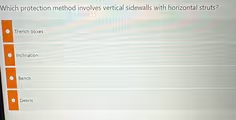
The correct answer to the question is Trench boxes.
A trench box, also commonly known as a trench shield, is a specific type of protective system used to ensure worker safety during excavation projects. This method perfectly matches the description of having vertical sidewalls with horizontal struts. The system is composed of two large, rigid plates, which act as the vertical sidewalls. These plates are placed parallel to the sides of the trench. Connecting these two sidewalls are several horizontal cross members called spreaders or struts. These struts hold the sidewalls apart and are often adjustable to accommodate different trench widths.
The primary function of a trench box is to shield workers from a cave in. It is crucial to understand that a trench box is a shielding system, not necessarily a shoring system. This means it is designed to protect workers inside the box if the trench walls collapse, rather than being designed to prevent the collapse from happening in the first place. The soil would collapse against the exterior of the strong shield, leaving the interior workspace safe. These prefabricated units are moved along the trench as work progresses.
The other options are incorrect for specific reasons. Inclination, or sloping, is a method where the trench walls are cut back at a predetermined angle to prevent collapse. The walls are angled, not vertical, and no struts are used. Benching involves excavating the sides of a trench to form a series of horizontal steps. This method also creates non vertical walls and does not use struts. Finally, Debris is not a protection method; it is the loose material and spoil from an excavation that can become a hazard, representing the very danger these systems are meant to protect workers from. Therefore, only the trench box system is defined by its use of vertical walls and horizontal struts.