The Correct Answer and Explanation is:
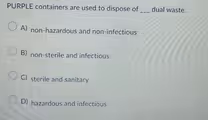
The correct answer is D) hazardous and infectious.
Purple waste containers are specifically designated for the disposal of dual hazard waste, which is waste that is simultaneously hazardous and infectious. This type of waste is most commonly associated with chemotherapy, also known as cytotoxic or antineoplastic waste. The distinct purple color serves as a universal warning to healthcare professionals and waste handlers about the specific dangers contained within.
The “hazardous” component comes from the nature of the drugs themselves. Chemotherapy drugs are designed to be toxic to cells, which is how they fight cancer. However, this toxicity also makes them dangerous to healthy individuals who may be exposed. They can be carcinogenic (cancer causing), mutagenic (capable of causing genetic mutation), and teratogenic (able to disturb the development of an embryo or fetus). Therefore, any item contaminated with these drugs, such as vials, syringes, IV bags, and tubing, is considered hazardous chemical waste.
The “infectious” component arises when these hazardous items also come into contact with a patient’s blood or other potentially infectious materials. For example, the IV line used to administer chemotherapy to a patient is contaminated with both the hazardous drug and the patient’s blood. This combination creates a dual waste stream. Personal protective equipment, like gloves and gowns worn during the administration of these drugs, also falls into this category if it is visibly contaminated with the drug and a bodily fluid.
Proper segregation is crucial. Disposing of this dual waste in a purple container ensures it is handled and treated appropriately, typically through high temperature incineration, which is necessary to destroy both the potent chemical agents and any infectious pathogens. This prevents environmental contamination and protects public health from these combined threats.