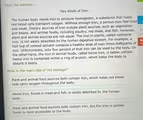
The Correct Answer and Explanation is:
Of course. Based on the text provided, here is the correct answer and a detailed explanation.
Correct Answer:
Plant and animal food sources both contain iron, but the iron in animal foods is more accessible to the body.
Explanation
This statement is the main idea because it accurately synthesizes the central argument and the overall structure of the passage. The text is not simply about iron in general; its primary purpose is to draw a critical distinction between the two main types of dietary iron and their effectiveness.
The passage begins by establishing a foundation, explaining why iron is essential for the body, specifically for producing hemoglobin to transport oxygen. It then introduces the two categories of iron sources, which are plant foods and animal foods. However, the pivot of the entire passage occurs with the word “However,” signaling that a contrast or a more important point is about to be made. The text states that these two sources “are not equal.” The remainder of the passage is dedicated to explaining this inequality.
It elaborates on nonheme iron from plants, using spinach as an example to show that even though a food may be rich in this iron, the body absorbs very little of it. In contrast, the passage describes heme iron from animal sources as being “better utilized” because it is structured in a way that allows for easy absorption.
The other options are incorrect because they are incomplete. The first option, “Plant and animal food sources both contain iron, which helps red blood cells carry oxygen throughout the body,” is a true statement from the text but only serves as background information. It misses the core comparison that is the focus of the passage. The second option, “Heme iron, found in meat and fish, is easily absorbed by the human body,” is also true but is too specific. It only represents one half of the comparison, completely ignoring the significant information provided about nonheme iron from plants. The correct main idea must encompass both sides of the argument to reflect the full scope of the text.