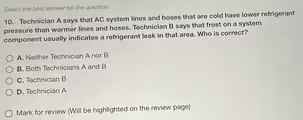
The Correct Answer and Explanation is:
The correct answer is B. Both Technicians A and B.
Here is an explanation of why both technicians are correct:
Technician A is correct because the temperature and pressure of a refrigerant are directly related. In an automotive AC system, there is a high-pressure side and a low-pressure side. The compressor pressurizes the refrigerant gas, making it hot and sending it to the condenser. This is the hot, high-pressure side of the system. After passing through an expansion device (like an expansion valve or orifice tube), the refrigerant’s pressure drops dramatically. This sudden drop in pressure causes the refrigerant to rapidly expand and boil inside the evaporator, a process which absorbs heat and makes the evaporator and the lines connected to it very cold. This is the cold, low-pressure side of the system. Therefore, the cold lines and hoses in an AC system always have lower pressure than the warmer ones.
Technician B is also correct. When refrigerant leaks from a pressurized part of the system, it undergoes rapid expansion as it escapes into the lower atmospheric pressure. This process, known as the Joule-Thomson effect, causes intense and localized cooling at the point of the leak. The temperature of the component at the leak can drop well below the freezing point of water (32°F or 0°C). As a result, moisture from the surrounding air will condense and freeze on the super-chilled surface, creating a patch of frost or ice. This localized frost, often accompanied by an oily residue from the refrigerant oil, is a classic visual indicator of a refrigerant leak.