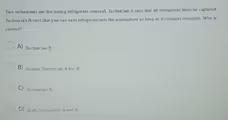
The Correct Answer and Explanation is:
The correct answer is C) Technician A.
Technician A is correct because environmental laws, such as Section 608 of the U.S. Clean Air Act, strictly mandate the recovery of all common refrigerants. These regulations were put in place because refrigerants, including chlorofluorocarbons (CFCs), hydrochlorofluorocarbons (HCFCs), and hydrofluorocarbons (HFCs), are damaging to the environment. They are known to deplete the ozone layer or act as potent greenhouse gases that contribute to climate change. Therefore, it is illegal to knowingly release these substances into the atmosphere during the maintenance, service, repair, or disposal of appliances. The proper and legally required procedure is to use certified recovery equipment to capture the refrigerant and store it in a designated, approved recovery cylinder. This process ensures the harmful chemicals are contained.
Technician B is incorrect. The presence of moisture or any other contaminant in a refrigerant does not create an exception that allows it to be vented. In fact, moisture is a serious contaminant in a refrigeration system, as it can lead to the formation of corrosive acids and sludge, which can cause significant damage to system components like the compressor. When a refrigerant is contaminated with moisture, it is even more critical that it be properly recovered. After recovery, the contaminated refrigerant must be either sent to an EPA certified reclaimer to be purified back to industry standards or be safely destroyed by a certified facility. Venting contaminated refrigerant is still a direct violation of federal law and poses the same environmental risks. The guiding principle for technicians is to always recover, never vent.