The Correct Answer and Explanation is:
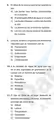
The correct answer to question 11 is (c) Convergência.
This question describes a fundamental pattern in evolution known as convergent evolution, or “convergência evolutiva” in Portuguese. Convergent evolution is the process by which unrelated or distantly related species independently develop similar traits to adapt to similar necessities or environments. These resemblances are not based on shared ancestry.
The examples given in the question perfectly illustrate this concept. The first part mentions the streamlined body shape of fish, which is an adaptation that reduces drag and facilitates movement in water. This same efficient body shape has also evolved independently in aquatic mammals like dolphins and extinct marine reptiles like ichthyosaurs, none of which are closely related to fish. They all “converged” on a similar solution to the same environmental challenge which is moving through a dense aquatic medium.
The second example, the evolution of wings for flight in birds, insects, and flying mammals such as bats, is another classic case. These three groups originate from very different evolutionary lineages, and their last common ancestor certainly could not fly. Yet, each group developed wings as a means of locomotion in the air. These wings are analogous structures, meaning they serve the same function but have different evolutionary origins and structural makeups. A bird’s wing is a modified forelimb with feathers, a bat’s wing consists of skin stretched across elongated finger bones, and an insect’s wing is an extension of its exoskeleton. This contrasts with homologous structures, which are features shared by related species because they have been inherited from a common ancestor. The other options are incorrect; for example, adaptive radiation (irradiação) is the opposite process, where a single ancestral species diversifies into multiple new forms.