The correct answer and explanation is:
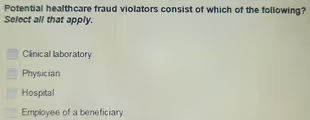
The correct answers are:
- Clinical laboratory
- Physician
- Hospital
Explanation
Healthcare fraud involves the intentional deception or misrepresentation by an individual or entity to receive an unauthorized benefit or payment from a healthcare program, such as private insurance, Medicare, or Medicaid. The potential for fraud exists wherever claims are submitted for reimbursement. Therefore, any entity that provides and bills for medical services can be a violator.
Physician
Physicians are one of the most common perpetrators of healthcare fraud. Common fraudulent schemes include “upcoding,” which is billing for a more expensive service than what was actually provided; “phantom billing,” which is billing for services, consultations, or procedures that were never rendered; and engaging in illegal kickback arrangements where they receive payment for referring patients to other specific providers or services.
Hospital
As large institutions that submit a high volume of complex claims, hospitals can also commit fraud. This can happen on a large scale, such as systematically misrepresenting patient diagnoses to fall into higher paying Diagnosis Related Groups (DRGs), billing for medically unnecessary admissions or services, or having improper financial relationships with physicians that violate federal anti kickback laws.
Clinical laboratory
Clinical laboratories are also frequent violators. Fraud schemes often involve billing for tests that were not medically necessary or never ordered by a physician. A prevalent scheme involves labs paying kickbacks to physicians in exchange for patient referrals, leading to a large volume of unnecessary tests being billed to insurance programs.
An employee of a beneficiary is not a typical violator. While a beneficiary (the patient) can commit fraud, such as by “loaning” their insurance card to someone else, their employee does not have the direct ability to bill healthcare programs. The primary violators are the healthcare providers and entities that submit the claims for payment.