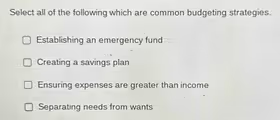
The correct answer and explanation is:
Based on the image provided, the correct answers are:
- Establishing an emergency fund
- Creating a savings plan
- Separating needs from wants
Explanation
Budgeting is the process of creating a plan to manage your income and expenses. The goal is to ensure you have enough money for your needs and important goals while avoiding debt. The selected options are all fundamental strategies for creating and maintaining a successful budget.
Establishing an emergency fund is a cornerstone of sound financial planning. This involves setting aside a separate pool of money, typically three to six months’ worth of essential living expenses, to cover unexpected costs like a job loss, medical emergency, or urgent home repair. By having an emergency fund, you create a financial safety net that prevents you from derailing your budget or going into debt when unforeseen events occur. It is a proactive part of a budget that accounts for life’s uncertainties.
Creating a savings plan is another critical component. A budget is not just about tracking spending; it is about directing your money toward your goals. A savings plan involves identifying short term and long term goals, such as a down payment for a house, retirement, or a vacation, and then allocating a specific portion of your income towards them each month. This strategy, often called “paying yourself first,” transforms saving from an afterthought into a fixed expense, ensuring consistent progress toward your financial objectives.
Separating needs from wants is a foundational exercise in budgeting. Needs are essential expenses required for survival and well being, such as housing, food, utilities, and transportation. Wants are nonessential items that improve your quality of life, like dining out, entertainment, and vacations. By distinguishing between the two, you can prioritize your spending, ensuring that all essential needs are met before any money is allocated to wants. This allows for conscious spending decisions and makes it easier to identify areas to cut back if you need to reduce expenses.
The option “Ensuring expenses are greater than income” is incorrect because it describes a budget deficit. The primary purpose of a budget is to live within your means, meaning your income should cover or exceed your expenses. Consistently spending more than you earn leads to debt and financial instability, which is the exact opposite of what a budget aims to achieve.