The correct answer and explanation is:
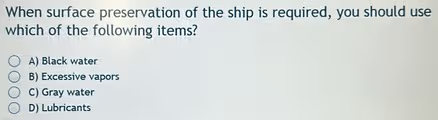
The correct answer is D) Lubricants.
Surface preservation on a ship is a critical and continuous task aimed at protecting the vessel’s metal structures and equipment from the highly corrosive marine environment. Saltwater, sea spray, and high humidity accelerate the process of oxidation, commonly known as rust, which can compromise the structural integrity and operational readiness of the ship.
Lubricants, including various oils and greases, are essential for this purpose. They function by creating a protective, non-porous barrier on metal surfaces. This layer physically separates the metal from corrosive agents like oxygen and water, effectively halting the chemical reaction that leads to rust. While their primary function is often to reduce friction in moving parts, their preservative quality is equally important.
For instance, wire ropes, winches, deck machinery, and anchor chains are regularly coated with specific marine-grade greases. These lubricants not only ensure smooth operation but also shield the equipment from constant exposure to the elements. Furthermore, specialized corrosion-preventive compounds, which are a type of light oil or soft grease, are applied to spare parts, internal machinery components, and inside enclosed spaces like voids or ballast tanks to ensure they remain in good condition over long periods.
The other options are incorrect. Black water is wastewater from toilets, and gray water is from sinks and showers; both are corrosive, contain contaminants, and are pollutants that must be managed, not used for preservation. Excessive vapors, whether from fuel, chemicals, or humidity, are generally hazardous and can contribute to corrosion rather than prevent it. Therefore, of the choices provided, only lubricants serve as a necessary item for the surface preservation of a ship.