The Correct Answer and Explanation is:
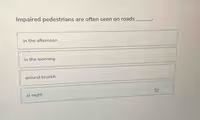
The correct answer is at night.
Impaired pedestrians are most frequently seen on roads at night due to a combination of social behaviors and environmental factors. The primary reason is the timing of alcohol and drug consumption. Social activities that often involve intoxicating substances, such as visiting bars, attending parties, or going to restaurants, predominantly take place in the evening and nighttime hours. When individuals become impaired, their judgment, coordination, and reaction time are severely compromised. This can lead to dangerous road behaviors, including jaywalking, stumbling into traffic, misjudging the speed and distance of oncoming vehicles, or failing to use designated crosswalks.
This risk is dangerously amplified by the environmental conditions of nighttime. Reduced visibility in the dark makes it inherently more difficult for drivers to spot pedestrians. An impaired person is also less likely to take safety precautions, such as wearing bright or reflective clothing, carrying a flashlight, or staying in well lit areas. The combination of a pedestrian exhibiting unpredictable behavior due to impairment and a driver’s limited ability to see them creates a perilous situation.
While other times of day present some risk, they are statistically far less common for this specific issue. The morning and afternoon are typically associated with work, school, and other routine activities where impairment is less prevalent. Although some social drinking may occur “around brunch,” particularly on weekends, it does not match the frequency or scale of nighttime consumption. Traffic safety data consistently confirms this trend, showing that the overwhelming majority of pedestrian fatalities involving alcohol occur between dusk and dawn. Therefore, the convergence of peak impairment and low visibility makes night the time when impaired pedestrians are most often encountered on roads.