The Correct Answer and Explanation is:
Here are the correct phrases for each box:
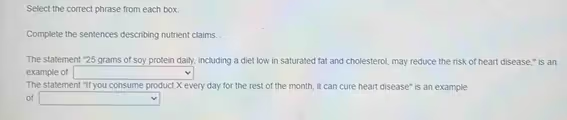
First blank: a health claim
Second blank: quackery
Explanation
Understanding the difference between legitimate food labeling claims and fraudulent ones is essential for making informed health decisions. The two statements in the question represent opposite ends of this spectrum.
The first statement, “25 grams of soy protein daily, including a diet low in saturated fat and cholesterol, may reduce the risk of heart disease,” is an example of a health claim. Health claims describe a relationship between a food or food component and a reduced risk of a disease or health related condition. These claims are regulated by government bodies like the Food and Drug Administration (FDA) in the United States. To be approved, they must be supported by significant scientific evidence. Note the careful wording: it says “may reduce the risk,” not that it will prevent or cure the disease. This cautious language is a key feature of a legitimate, science backed health claim.
The second statement, “If you consume product X every day for the rest of the month, it can cure heart disease,” is an example of quackery. Quackery, or health fraud, involves promoting unproven or false medical practices. This statement makes a definitive promise that a product can “cure” a serious disease. Claims to diagnose, treat, cure, or prevent a disease are legally considered drug claims, not food claims. For a product to make such a claim, it must undergo rigorous testing and be approved as a drug. Making such a bold and unsubstantiated claim for a food product is illegal, misleading, and potentially dangerous, as it might lead someone to abandon proven medical treatments. It is a clear red flag for a fraudulent product.