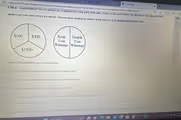
Of course. Here is the correct answer and a detailed explanation.
Correct Answer:
The possible final prize amounts and their corresponding probabilities are:
- $100: 1/6 probability
- $200: 1/3 probability (or 2/6)
- $400: 1/6 probability
- $500: 1/6 probability
- $1000: 1/6 probability
Explanation:
To solve this problem, we must first determine the probability of each outcome on the individual spinners and then combine them to find the probabilities of the final prize amounts. The two spinner events are independent, which means the outcome of the first spin does not affect the outcome of the second.
First, let’s analyze Spinner 1. It is divided into three equal sections: $100, $200, and $500. Since the sections are of equal size, the probability of landing on any one of them is 1 out of 3, or 1/3.
Next, we analyze Spinner 2. It is divided into two equal sections: “Keep Your Winnings” and “Double Your Winnings”. With two equal sections, the probability of landing on either one is 1 out of 2, or 1/2.
To find the probability of a combined outcome, we multiply the probabilities of the individual events. There are six possible paths a contestant can take:
- Spin $100, then Keep: The prize is $100. Probability = (1/3) * (1/2) = 1/6.
- Spin $100, then Double: The prize is $200. Probability = (1/3) * (1/2) = 1/6.
- Spin $200, then Keep: The prize is $200. Probability = (1/3) * (1/2) = 1/6.
- Spin $200, then Double: The prize is $400. Probability = (1/3) * (1/2) = 1/6.
- Spin $500, then Keep: The prize is $500. Probability = (1/3) * (1/2) = 1/6.
- Spin $500, then Double: The prize is $1000. Probability = (1/3) * (1/2) = 1/6.
Finally, we list the unique prize amounts and sum the probabilities for any amount that can be won in more than one way. Notice that a prize of
200canbeachievedthroughtwodifferentpaths.Wemustaddtheirprobabilitiestogether:1/6+1/6=2/6,whichsimplifiesto1/3.Allotherprizeamounts(200canbeachievedthroughtwodifferentpaths.Wemustaddtheirprobabilitiestogether:1/6+1/6=2/6,whichsimplifiesto1/3.Allotherprizeamounts(100, $400, $500, $1000) can only be achieved in one way, so their probability remains 1/6.