The Correct Answer and Explanation is:
Of course. Here are the correct answers for the worksheet, followed by a detailed explanation of the mathematical concepts involved.
Correct Answers
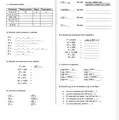
- A) Complete the tables:
- Row 1: Predecesor: 27, Succesor: 29, Răsturnatul: 82
- Row 2: Număr: 50, Succesor: 51, Răsturnatul: 05 (or 5)
- Row 3: Predecesor: 88, Număr: 89, Răsturnatul: 98
- Row 4: Predecesor: 60, Număr: 61, Succesor: 62
- Row 5: Predecesor: 32, Succesor: 34, Răsturnatul: 33
- B) Decompose the numbers: 34 = 30+4; 91 = 90+1; 57 = 50+7; 80 = 80+0; 45 = 40+5; 76 = 70+6
- C) Make the correspondence: 8+50 connects to 58; 40+7 connects to 47; 2+30 connects to 32; 70+9 connects to 79; 4+60 connects to 64
- D) Compare the numbers: 68 < 86; 97 > 79; 52 = 52; 16 < 61
- E) Write the numbers in digits: 75; 39; 81; 50
- F) Circle the indicated number: The correct choices are 99; 10; 97; 11.
- G) Calculate: 59; 45; 61; 70; 58; 49
- H) Transform: 200 cm; 4 m; 7 m; 500 cm; 90 dm; 600 cm
- I) Write in order:
- Increasing (Crescător): 9, 12, 31, 54, 70, 86
- Decreasing (Descrescător): 94, 63, 49, 28, 15, 6
Explanation
This worksheet assesses a range of basic mathematical skills appropriate for early elementary education.
The first section, A, focuses on number relationships. The “predecesor” is the number that comes immediately before a given number (n-1), and the “succesor” is the number that comes immediately after (n+1). The “răsturnatul” is the number formed by reversing the digits.
Section B deals with place value, breaking down numbers into their tens and units. This concept is crucial for understanding how our number system works and for performing calculations. For example, the number 57 consists of 5 tens (50) and 7 units (7).
Sections C and G provide practice with basic addition and subtraction. Section D tests number comparison using the symbols for “less than” (<), “greater than” (>), and “equal to” (=).
Section E requires converting number words written in Romanian into numerals. Section F is a logic puzzle that requires identifying numbers with specific characteristics, such as being the largest, smallest, even, odd, or having identical or different digits. For example, the smallest even two-digit number is 10.
Section H involves converting between metric units of length. The key relationships are that 1 meter equals 100 centimeters, and 1 meter equals 10 decimeters. Using these facts, one can perform the required conversions, like changing 40 decimeters into 4 meters.
Finally, section I tests the ability to order numbers. “Crescător” means arranging them from smallest to largest (increasing order), while “descrescător” means putting them in order from largest to smallest (decreasing order).