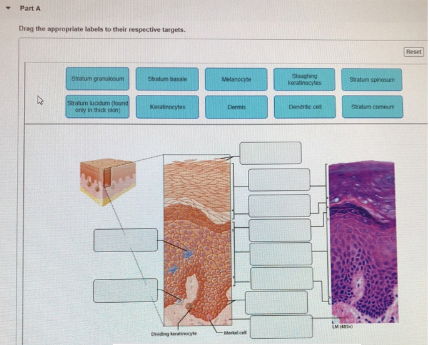
Art-Labeling Activity: Structure of the epidermis Part A Drag the appropriate labels to their respective targets. Reset Stratum granulosum Stratum basale Melanocyte Stratum spinosum Stratum lucidum Dermis Dendritic cell Stratum corneum only in thick skin) LM (4830 Dividing keratinocyte Merkelcel
The Correct Answer and Explanation is :
The epidermis, the outermost layer of the skin, serves as a protective barrier against environmental factors. It comprises several distinct layers, each with unique functions and cell types. From the deepest to the most superficial, these layers are:
- Stratum Basale (Basal Layer): This is the deepest layer, consisting of a single row of columnar or cuboidal keratinocytes. These cells are highly mitotic, continually dividing to produce new keratinocytes that migrate toward the skin’s surface. Melanocytes, responsible for producing the pigment melanin, and Merkel cells, associated with sensory perception, are also found here.
- Stratum Spinosum (Prickly Layer): Situated above the stratum basale, this layer contains several rows of keratinocytes that appear spiny due to desmosomal connections. These cells begin synthesizing keratin and accumulating lamellar bodies, contributing to the skin’s strength and flexibility. Dendritic (Langerhans) cells, which play a role in immune response, are present in this layer.
- Stratum Granulosum (Granular Layer): Comprising three to five layers of flattened keratinocytes, this layer is characterized by the presence of keratohyalin granules, which facilitate keratin aggregation. Cells in this layer undergo significant changes, including the loss of nuclei and organelles, leading to cell death. The release of lipids from lamellar bodies into the extracellular space forms a lipid barrier, crucial for preventing water loss and protecting against foreign substances.
- Stratum Lucidum (Clear Layer): This thin, translucent layer is present only in thick skin areas, such as the palms of the hands and soles of the feet. It consists of a few rows of flat, dead keratinocytes filled with eleidin, a precursor to keratin, providing an additional barrier against friction.
- Stratum Corneum (Horny Layer): The outermost layer, composed of 15 to 30 layers of dead, flattened keratinocytes known as corneocytes. These cells are devoid of nuclei and are embedded in a lipid matrix, forming a tough, protective layer that prevents dehydration and shields underlying tissues from mechanical injury, pathogens, and chemical exposure. Cells in this layer are continuously shed and replaced by cells from the deeper layers.
Beneath the epidermis lies the dermis, a connective tissue layer that provides structural support and nourishment to the epidermis. It contains blood vessels, nerves, hair follicles, and glands.
Understanding the structure of the epidermis is essential for comprehending its role in protection, sensation, thermoregulation, and overall skin health.