Classify the reactions as either endothermic or exothermic
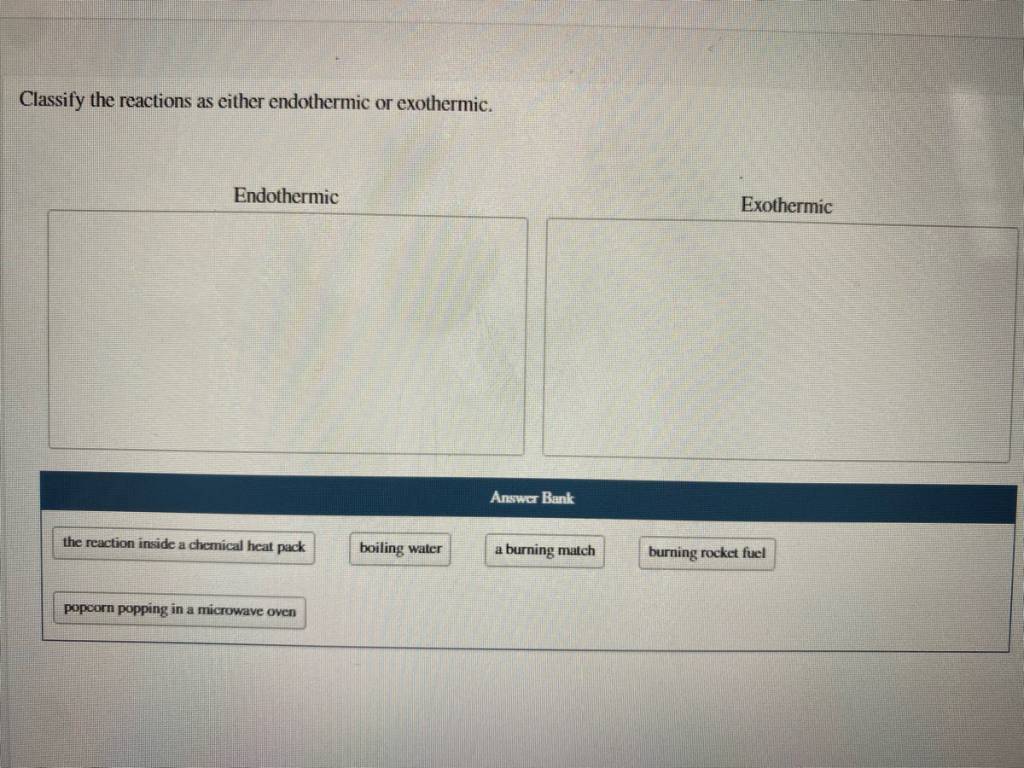
reactions as either endothermic or exothermic. Endothermic the reaction inside a chemical heat pack popcorn popping in a microwave oven boiling water Answer Bank a burning match Exothermic burning rocket fuel
The Correct Answer and Explanation is :
Chemical reactions are classified based on their energy exchange with the surroundings into two main categories: endothermic and exothermic reactions.
Endothermic Reactions:
These reactions absorb energy from their surroundings, typically in the form of heat. As a result, the surroundings experience a decrease in temperature. Common examples include:
- Photosynthesis: Plants absorb sunlight to convert carbon dioxide and water into glucose and oxygen. This process requires energy input, making it endothermic.
- Boiling Water: Converting liquid water to steam requires heat absorption, classifying this phase change as endothermic.
- Cooking an Egg: The denaturation of proteins in an egg upon heating is an endothermic process, as it absorbs heat to break chemical bonds.
Exothermic Reactions:
These reactions release energy to their surroundings, usually as heat, leading to an increase in the temperature of the surroundings. Examples include:
- Burning a Match: The combustion of the matchstick material releases heat and light, indicating an exothermic reaction.
- Burning Rocket Fuel: The combustion of rocket fuel releases a significant amount of energy, propelling the rocket forward.
- Condensation of Water Vapor: When water vapor condenses into liquid water, it releases heat, making this process exothermic.
Understanding whether a reaction is endothermic or exothermic is crucial in various fields, including chemistry, engineering, and environmental science, as it influences reaction conditions, energy requirements, and the design of chemical processes.