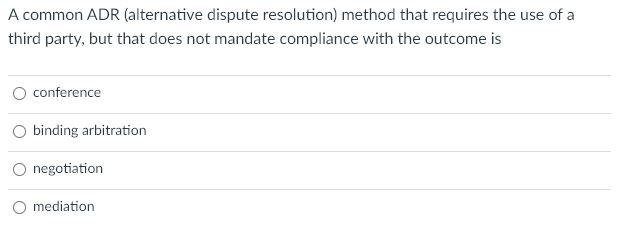
A common ADR (alternative dispute resolution) method that requires the use of a third party, but that does not mandate compliance with the outcome is conference binding arbitration negotiation mediation
Q48;
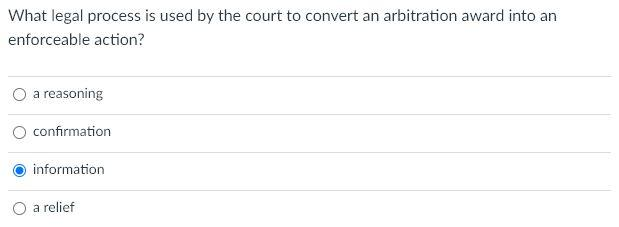
What legal process is used by the court to convert an arbitration award into an enforceable action? a reasoning confirmation information a relief
The correct answer and explanation is:
The correct answer to the first question is mediation.
Explanation for Question 1:
Mediation is a common Alternative Dispute Resolution (ADR) method that involves the use of a third-party mediator to help parties resolve a dispute. Unlike arbitration, where the arbitrator’s decision is typically binding, mediation focuses on facilitating negotiation and dialogue between the disputing parties. The mediator does not impose a decision but instead helps both sides communicate more effectively and reach a voluntary agreement.
In mediation, the third-party mediator acts as a neutral facilitator to assist the parties in identifying the issues and exploring potential solutions. The outcome of mediation is not legally binding unless both parties reach a settlement and agree to it in writing. If the parties cannot reach an agreement, they are free to pursue other legal remedies, such as litigation or arbitration.
The other ADR methods mentioned—conference binding arbitration and negotiation—typically involve more formal structures and processes. Conference binding arbitration is a form of arbitration in which the decision of the arbitrator is legally binding. In contrast, negotiation allows parties to directly communicate to resolve disputes without the need for a third party, although lawyers may be involved.
Explanation for Question 2:
The legal process used by the court to convert an arbitration award into an enforceable action is confirmation.
When an arbitration award is made, it is typically not automatically enforceable as a judgment unless the court intervenes. The process of confirmation involves the court reviewing the arbitration award and, if appropriate, formally recognizing it as enforceable. Confirmation is a legal procedure where the court reviews the award for fairness, ensures that the process of arbitration was conducted properly, and validates the award. Once confirmed, the arbitration award has the same legal effect as a court judgment and can be enforced in the same manner.
The process is important because it ensures that the arbitration award is subject to the same legal principles as other judgments. Confirmation helps make the award enforceable, allowing the prevailing party to seek remedies like garnishment or asset seizure if the losing party does not comply with the award voluntarily.