What is the name of this compound
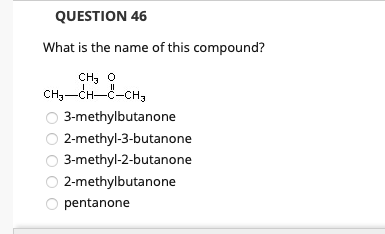
The Correct Answer and Explanation is :
The compound shown in the image is p-chloronitrobenzene. Here’s the explanation:
Understanding the Structure
The structure is based on a benzene ring, which consists of six carbon atoms forming a planar cyclic arrangement with alternating double bonds (aromaticity). Substituents on the benzene ring modify its name and properties.
Key Features in the Compound:
- Chlorine substituent (-Cl): This halogen atom is attached directly to the benzene ring.
- Nitro group (-NO₂): A functional group consisting of one nitrogen atom bonded to two oxygen atoms, with one bond being a double bond and the other a single bond. This is a characteristic of nitro compounds.
Naming Rules Applied:
- Identify the parent chain: The parent chain is benzene, as the aromatic ring forms the backbone.
- Assign substituents: The nitro group (-NO₂) and the chlorine (-Cl) are attached as substituents.
- Determine positions: These groups are positioned opposite to each other on the benzene ring. In IUPAC nomenclature, this is referred to as the para position (abbreviated as “p-“), meaning the substituents are separated by two carbon atoms.
- Alphabetical order: Substituents are named in alphabetical order. “Chloro” comes before “nitro.”
Thus, the compound’s name is p-chloronitrobenzene.
Detailed Explanation
This naming follows the IUPAC system, which ensures consistency and clarity in chemical nomenclature. The para (p-) descriptor specifies the relative position of the substituents, simplifying communication about the compound’s structure.
This compound is widely used in chemical synthesis, particularly as an intermediate in producing dyes, pesticides, and pharmaceuticals. The nitro group introduces electron-withdrawing properties, influencing the reactivity of the benzene ring.