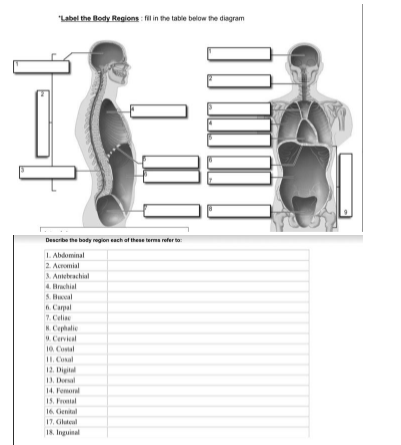
Describe The Body Region Each Of These Terms Refer To: 1. Abdominal 2. Acromial 3. Antebrachial 4. Brachial 5. Buccal 6. Carpal 7. Celiac 8. Cephalic 9. Cervical 10. Costal 11. Coxal 12. Digital 13. Dorsal 14. Femoral 15. Frontal 16. Genital 17. Gluteal 18. Inguinal 19. Lumbar 20.

The Correct Answer and Explanation is :
Here is the explanation of the body regions referred to by each term:
- Abdominal: Refers to the abdomen, the area between the thorax (chest) and pelvis.
- Acromial: Pertains to the acromion, the bony process on the scapula (shoulder blade).
- Antebrachial: Refers to the forearm, the part of the arm between the wrist and elbow.
- Brachial: Relates to the upper arm, specifically the area between the shoulder and the elbow.
- Buccal: Pertains to the cheek or the inside of the cheek.
- Carpal: Refers to the wrist region.
- Celiac: Relates to the abdomen, particularly the upper central region of the abdomen.
- Cephalic: Refers to the head or the head region.
- Cervical: Pertains to the neck or the cervical spine region.
- Costal: Relates to the ribs or the ribcage area.
- Coxal: Refers to the hip or hip joint area.
- Digital: Pertains to the fingers or toes.
- Dorsal: Refers to the back or posterior side of the body.
- Femoral: Relates to the thigh or the upper leg region.
- Frontal: Pertains to the forehead or the front part of the skull.
- Genital: Refers to the reproductive organs or the genital region.
- Gluteal: Relates to the buttocks or gluteal muscles.
- Inguinal: Refers to the groin area, where the thighs meet the abdomen.
- Lumbar: Pertains to the lower back region, between the ribcage and pelvis.
Explanation
These anatomical terms are used to precisely identify specific areas of the body in medical, biological, and anatomical contexts. Each term corresponds to a well-defined region to avoid ambiguity in communication. For example, the brachial region (upper arm) is distinguished from the antebrachial region (forearm), aiding in precise diagnoses or descriptions.
Using standardized anatomical terminology ensures that professionals globally can understand and discuss body regions consistently, regardless of language barriers. This precision is crucial in fields like surgery, diagnostics, and physiotherapy.