When a vinegar and oil salad dressing separates into two layers, the oil floats on top of the vinegar. The density of the oil
___________ a) is less than
(B) Cannot be compared to
(c) S the same as
(D) is greater than
The density of the vinegar
The Correct Answer and Explanation is :
The correct answer is (A) is less than.
Explanation:
When making a salad dressing with vinegar and oil, the two liquids typically separate into two distinct layers after being mixed. The oil floats on top of the vinegar due to the difference in their densities.
Density is defined as mass per unit volume (often expressed as ( \rho = \frac{m}{V} ), where ( \rho ) is density, ( m ) is mass, and ( V ) is volume). In the case of vinegar and oil, their densities are different.
- Density of oil: Oil, such as olive oil or vegetable oil, generally has a lower density than water and vinegar. The typical density of oil ranges from about 0.91 to 0.93 g/cm³. This means that oil is “lighter” than water, which is why it floats on top when the two liquids are combined.
- Density of vinegar: Vinegar is primarily composed of water and acetic acid. Since water has a higher density than most oils (with a density of about 1.00 g/cm³), vinegar, which is mostly water, also has a higher density than oil. The density of vinegar ranges from about 1.01 to 1.03 g/cm³.
Due to this difference in density, when oil and vinegar are mixed and then left to settle, the oil floats on top because its density is less than that of vinegar. The separation into two layers is a result of the oil being less dense and therefore not able to mix with the denser vinegar.
In conclusion, the reason the oil floats on top of the vinegar is due to the lower density of the oil compared to the vinegar.
Now, let me create an image to visualize this separation process.
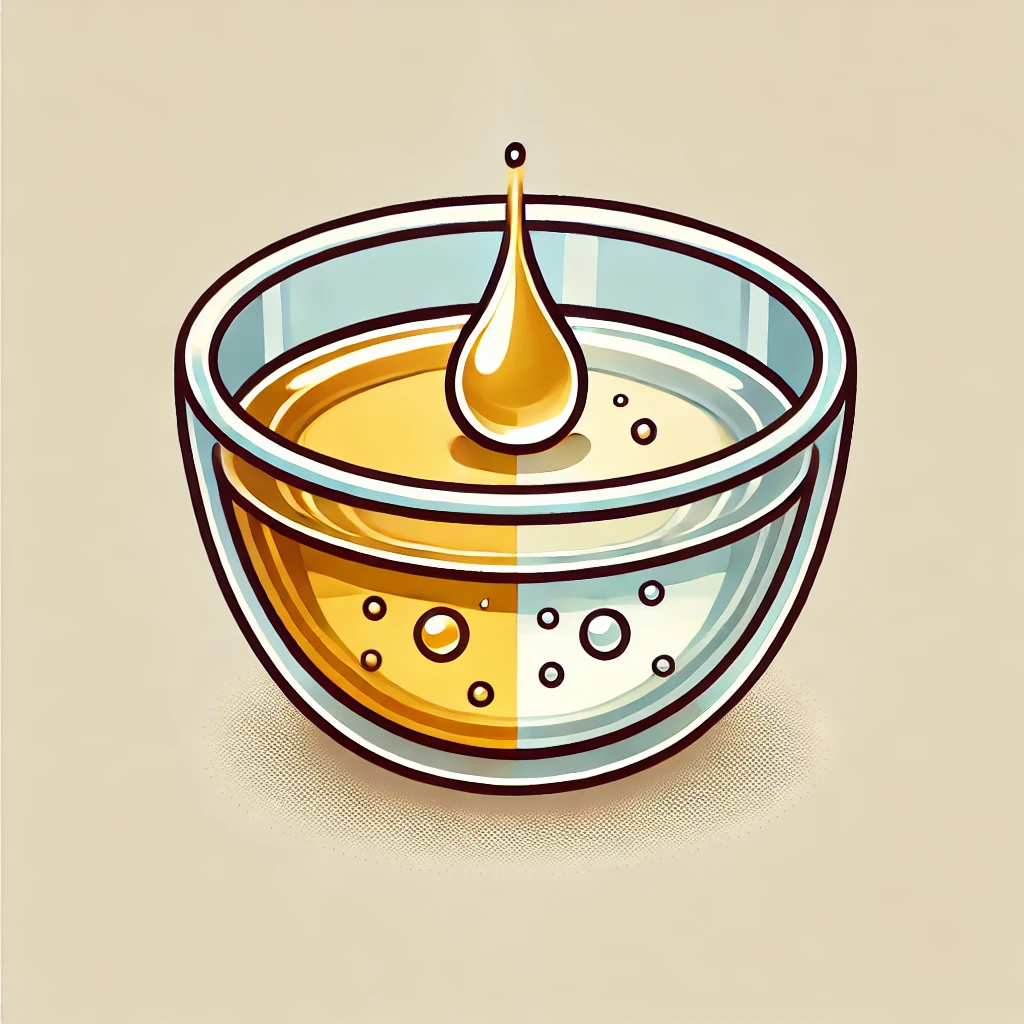
Here is the illustration showing the separation of vinegar and oil, with the oil floating on top of the vinegar due to its lower density. Let me know if you’d like any further details or clarification!