What volume of benzene (C6H6, d= 0.88 g/mL, molar mass = 78.11 g/mol) is required to produce 1.5 x 10³ kJ of heat according to the following reaction?  What volume of benzene (C6H6, d= 0.88 g/mL, molar mass = 78.11 g/mol) is required to produce 1.5 x 10³ kJ of heat according to the following reaction? ÂÂ
The correct answer and explanation is :
To determine the volume of benzene (C₆H₆) required to produce 1.5 × 10³ kJ of heat during combustion, we can follow these steps:
- Balanced Combustion Reaction:
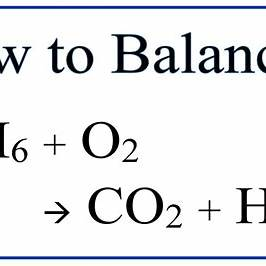
The complete combustion of benzene is represented by the following balanced chemical equation: [ \text{C}_6\text{H}_6(l) + \frac{15}{2}\text{O}_2(g) \rightarrow 6\text{CO}_2(g) + 3\text{H}_2\text{O}(l) ] - Enthalpy of Combustion:
The standard enthalpy change (ΔH°) for the combustion of benzene is approximately -3267 kJ/mol. citeturn0search0 - Moles of Benzene Needed:
To calculate the moles of benzene required to produce 1.5 × 10³ kJ of heat: [ \text{Moles of C}_6\text{H}_6 = \frac{1500\ \text{kJ}}{3267\ \text{kJ/mol}} \approx 0.459\ \text{mol} ] - Mass of Benzene Needed:
Using the molar mass of benzene (78.11 g/mol): [ \text{Mass of C}_6\text{H}_6 = 0.459\ \text{mol} \times 78.11\ \text{g/mol} \approx 35.85\ \text{g} ] - Volume of Benzene Needed:
Given the density of benzene is 0.88 g/mL: [ \text{Volume of C}_6\text{H}_6 = \frac{35.85\ \text{g}}{0.88\ \text{g/mL}} \approx 40.74\ \text{mL} ]
Therefore, approximately 40.74 mL of benzene is required to produce 1.5 × 10³ kJ of heat during combustion.
Explanation:
Combustion reactions involve the exothermic process of a substance reacting with oxygen to release energy in the form of heat. For benzene, a hydrocarbon, the combustion yields carbon dioxide and water. The enthalpy change (ΔH°) indicates the amount of heat released per mole of benzene combusted.
By dividing the desired heat output (1.5 × 10³ kJ) by the enthalpy change per mole, we determine the moles of benzene needed. Multiplying the moles by the molar mass gives the mass required. Finally, using the density, we convert this mass to volume.
This calculation is crucial in fields like chemical engineering and energy production, where precise measurements of fuel are necessary to achieve specific energy outputs efficiently and safely.