Select one bolded section that interests you and read through it. Summarize what the rules cover. Is there anything missing that you feel should be added? Are there any guidelines that you would eliminate? What would be the biggest challenge an auditor might face following your chosen section? Be sure to respond to at least one of your classmates’ posts with new information about the topic, a clarifying example, and so on.
The correct answer and explanation is :
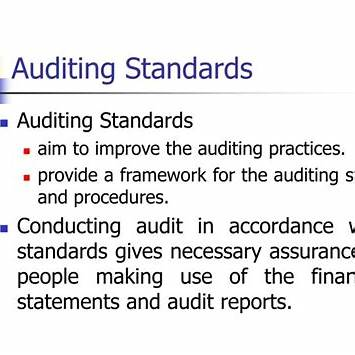
I have chosen to focus on General Standards within the Generally Accepted Auditing Standards (GAAS). These standards establish the foundational qualities and ethical principles that auditors must uphold to ensure the integrity and quality of their work.
Summary of General Standards:
- Technical Training and Proficiency: Auditors are required to possess adequate technical training and proficiency. This ensures they have the necessary knowledge and skills to conduct audits effectively.
- Independence: Auditors must maintain independence in mental attitude in all matters related to the audit assignment. This independence is crucial for providing unbiased and objective assessments of financial statements.
- Due Professional Care: Auditors are expected to exercise due professional care during the performance of the audit and the preparation of the report. This involves applying diligence and professional skepticism throughout the audit process.
Potential Additions:
While the General Standards are comprehensive, the evolving business environment suggests that incorporating explicit guidelines on continuing professional education could be beneficial. Mandating regular updates on emerging issues, such as technological advancements and new regulatory requirements, would ensure auditors remain current in their field.
Guidelines to Reconsider:
The existing General Standards are fundamental and broadly applicable; thus, eliminating any of them could compromise audit quality. Each standard addresses a critical aspect of the auditor’s responsibilities.
Challenges for Auditors:
Adhering to the Independence standard can be particularly challenging. Auditors may face pressures from clients or develop close relationships over time, potentially compromising their objectivity. Maintaining independence requires vigilance and a strong ethical framework to avoid conflicts of interest.
Response to Classmate’s Post:
Building upon your discussion of the Field Work Standards, particularly the importance of understanding an entity’s internal controls, it’s essential to recognize that this understanding not only aids in risk assessment but also in designing effective audit procedures. For instance, if an auditor identifies that a company has weak controls over inventory management, they might increase the scope of inventory testing to mitigate the risk of material misstatement.
Incorporating these considerations ensures a more robust audit process and enhances the reliability of the auditor’s conclusions.