Which statement describes the citric acid cycle?
View Available Hint(s)for Part F
This process splits glucose in half and produces 2 ?ATPs for each glucose.
This process converts pyruvic acid to acetyl CoA.
This process joins 2 ?pyruvic acid molecules into a molecule of glucose.
This process uses energy captured from electrons flowing to oxygen to produce most of the ATPs in cellular respiration.
This process produces some ATP and carbon dioxide in the mitochondrion.
The correct answer and explanation is:
Correct Answer:
“This process produces some ATP and carbon dioxide in the mitochondrion.”
Explanation:
The citric acid cycle (Krebs cycle or TCA cycle) is a key metabolic pathway that takes place in the mitochondrial matrix of eukaryotic cells. It plays a crucial role in cellular respiration by oxidizing acetyl-CoA into carbon dioxide and capturing high-energy electrons used for ATP production.
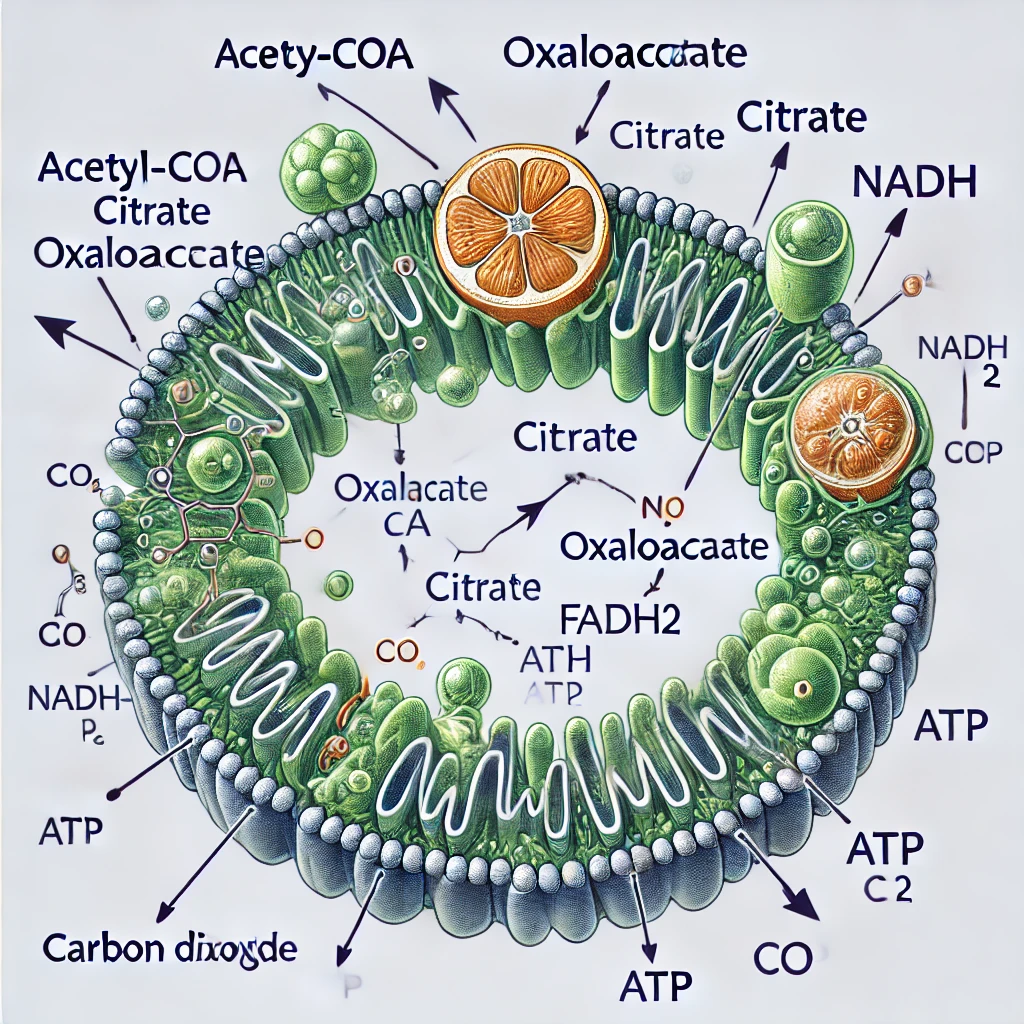
The cycle begins when acetyl-CoA (derived from pyruvate oxidation) combines with oxaloacetate to form citrate. This molecule then undergoes a series of enzyme-catalyzed transformations, during which it releases two molecules of carbon dioxide (CO₂) and generates energy-storing molecules: NADH, FADH₂, and ATP (or GTP in some cells). The cycle also regenerates oxaloacetate, ensuring that the process can continue.
Key outputs of the citric acid cycle include:
- 2 CO₂ per cycle (waste product exhaled from the body).
- 3 NADH and 1 FADH₂, which carry high-energy electrons to the electron transport chain (ETC) for ATP production.
- 1 ATP (or GTP) directly produced via substrate-level phosphorylation.
While the citric acid cycle itself does not produce the majority of ATP in cellular respiration, it plays a fundamental role by providing the high-energy electrons necessary for ATP synthesis in the electron transport chain (ETC). This final step generates the bulk of ATP by harnessing the energy of electron flow and oxidative phosphorylation.
Since the cycle occurs in the mitochondria, it is exclusive to aerobic respiration, meaning it requires oxygen indirectly to function properly.
Now, I’ll generate an image illustrating the citric acid cycle.
Here is the detailed and labeled diagram of the citric acid cycle (Krebs cycle) occurring in the mitochondrion. It includes key molecules such as Acetyl-CoA, Citrate, Oxaloacetate, NADH, FADH₂, ATP, and CO₂, along with arrows indicating stepwise transformations. Let me know if you need any modifications or further explanations!