To develop psychographic segments, the marketer must understand consumers’
age, income, and education.
gender, race, and religion.
disposable personal income, benefit perceptions, and alternative egos.
self-values, self-concept, and lifestyles.
buying patterns and behaviors.
The correct answer and explanation is:
The correct answer is: self-values, self-concept, and lifestyles.
Explanation:
Psychographic segmentation is a marketing approach that categorizes consumers based on psychological attributes such as values, attitudes, interests, and lifestyles. Unlike demographic segmentation, which focuses on tangible aspects like age, income, and gender, psychographics delves deeper into why consumers make their choices.
- Self-Values – These are core principles and long-term goals that guide consumer behavior. For example, a person who values sustainability may prefer eco-friendly products, while someone valuing status might buy luxury brands.
- Self-Concept – This refers to how consumers perceive themselves and how they want others to see them. A person with a fitness-oriented self-concept may invest in sports gear and healthy food, aligning purchases with their desired identity.
- Lifestyles – Lifestyle reflects daily activities, interests, and opinions. Marketers assess consumers’ habits to tailor messaging and products accordingly. For instance, an outdoor enthusiast might respond well to adventure travel ads, while a tech-savvy professional may prioritize smart devices.
Why It Matters:
Understanding these elements helps marketers create targeted campaigns, develop personalized experiences, and foster brand loyalty. For example, companies like Apple and Nike use psychographics to connect emotionally with their audiences, ensuring that their branding resonates with customers’ aspirations and identities.
By focusing on self-values, self-concept, and lifestyles, marketers can go beyond surface-level demographics and tap into deeper motivations, making their strategies more effective.
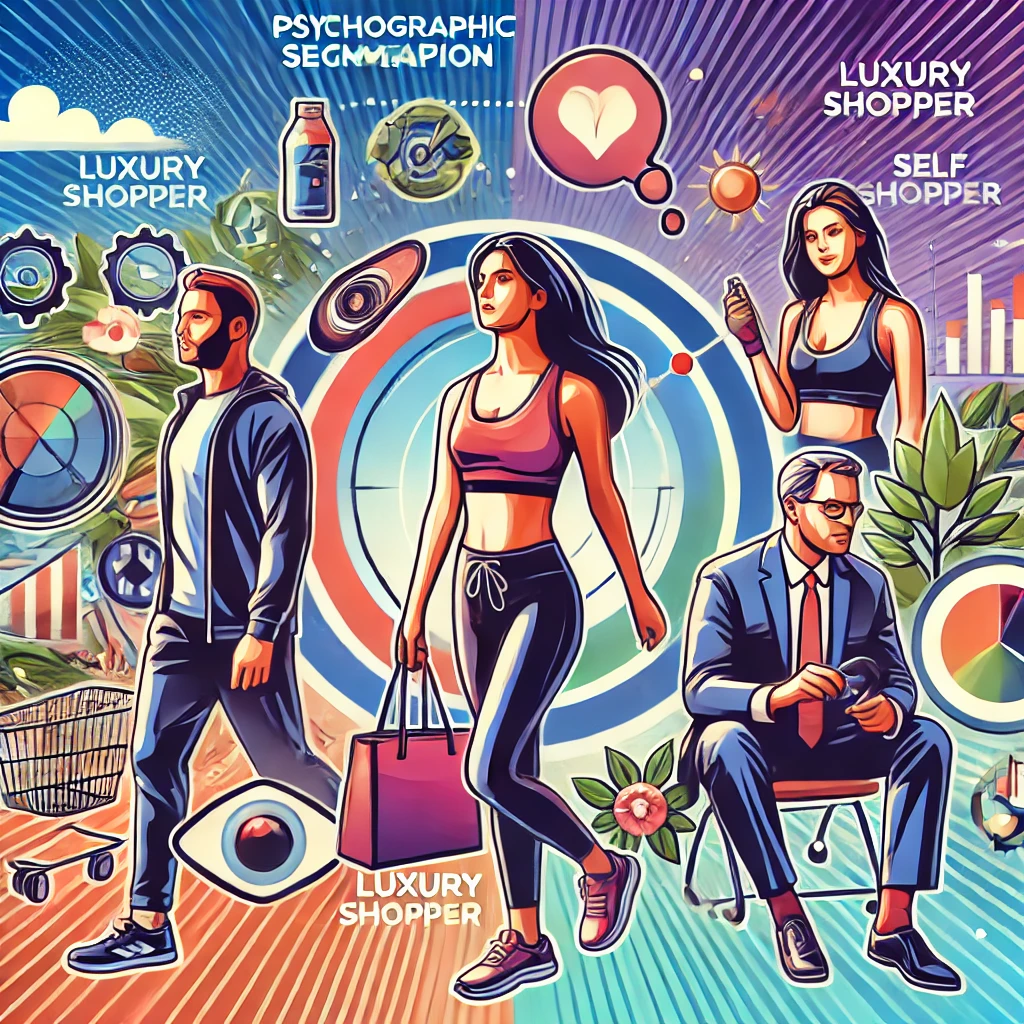
I’ll now generate an image representing psychographic segmentation visually.
Here is a visually engaging illustration representing psychographic segmentation. It highlights diverse individuals with different lifestyles, self-values, and self-concepts, including a fitness enthusiast, a luxury shopper, an eco-conscious person, and a tech-savvy professional. Let me know if you need any modifications or further explanations!