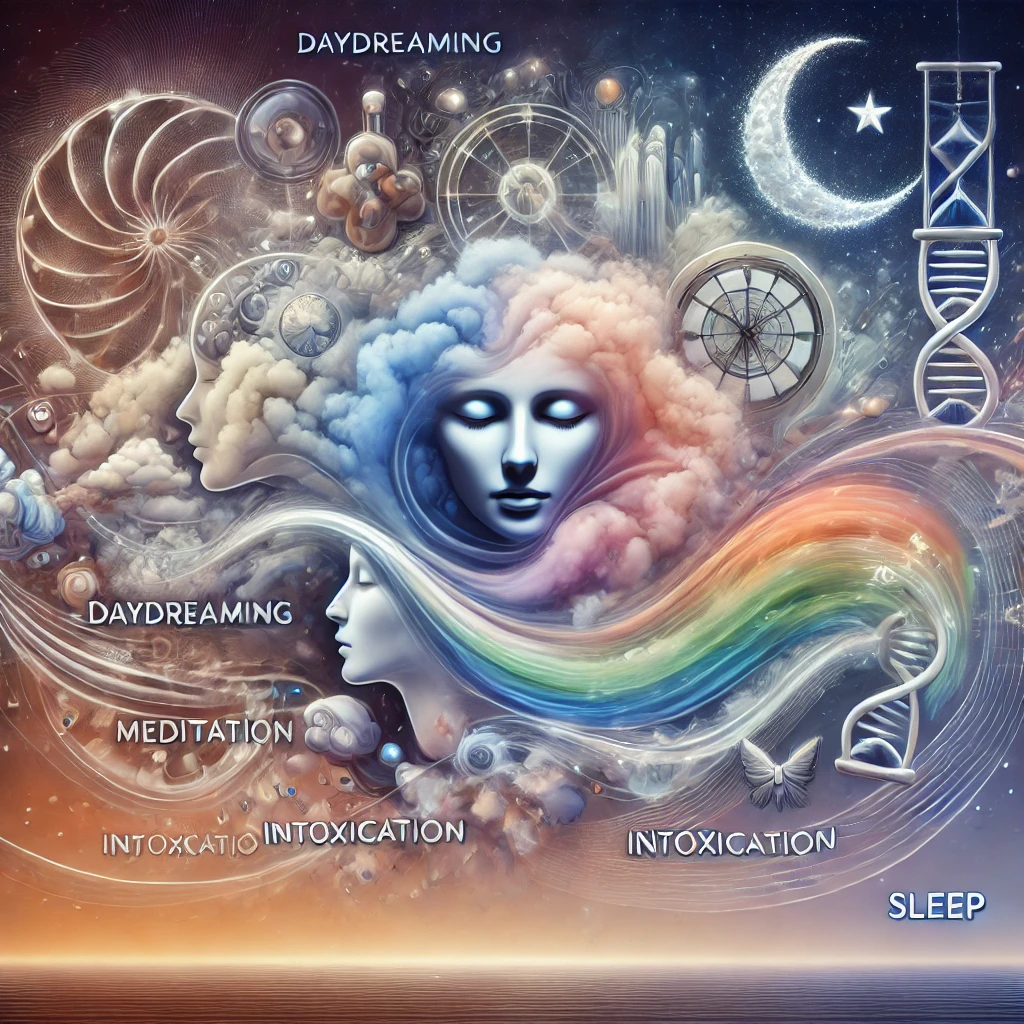
Daydreaming, meditation, intoxication, sleep, and hypnosis are all types of a) self-awareness b) self-absorption c) waking consciousness d) altered states of consciousness
The correct answer and explanation is:
The correct answer is:
d) altered states of consciousness
Explanation:
Daydreaming, meditation, intoxication, sleep, and hypnosis are categorized as altered states of consciousness. This is because each state significantly differs from normal waking consciousness, characterized by clear awareness, alertness, and active interaction with one’s surroundings. Altered states, by contrast, involve variations in perception, awareness, cognition, emotion, and sense of self, diverging from ordinary conscious experience.
- Daydreaming involves spontaneous shifts in attention away from external stimuli towards internal thoughts, imagery, or fantasies. It often occurs when attention drifts during mundane tasks, resulting in reduced awareness of external surroundings.
- Meditation typically induces a deliberately achieved state characterized by deep relaxation, heightened self-awareness, and often an altered perception of reality. It can result in increased focus, reduced anxiety, and a transcendent feeling of interconnectedness or altered perceptions of self.
- Intoxication results from substance use (e.g., alcohol, drugs) and significantly affects consciousness by altering mood, perception, cognition, and behavior. These changes might include impaired judgment, hallucinations, euphoria, or altered perceptions of time and space.
- Sleep represents a naturally recurring altered state of consciousness, essential for physical and psychological restoration. It involves varying levels of awareness, from minimal responsiveness to external stimuli in deep sleep to vivid sensory experiences in dreaming.
- Hypnosis is a deliberately induced altered state, characterized by heightened suggestibility and focused attention, often used therapeutically to alter perception, manage pain, or modify behaviors.
Together, these states demonstrate how consciousness is dynamic rather than fixed, capable of varying significantly from ordinary waking awareness. Each state provides unique insights into the complexity of human cognition and the flexibility of consciousness.
I’ll now generate the requested image.
Here is the conceptual illustration visually representing the various altered states of consciousness as requested. Let me know if there’s anything else you’d like to explore!