Herzberg’s research found that safe working conditions and good pay
Select one:
a. ?helped maintain worker satisfaction, but did little to increase motivation.
b. ?were very important motivators for professional employees and managers, but were poor motivators for unskilled employees.
c. ?had no impact on worker morale.
d. ?are important motivators for most employees.
The correct answer and explanation is:
The correct answer is:
a. helped maintain worker satisfaction, but did little to increase motivation.
Explanation:
Herzberg’s research, also known as the Two-Factor Theory or Motivation-Hygiene Theory, distinguishes clearly between factors that create job satisfaction (motivators) and factors that prevent dissatisfaction (hygiene factors). According to Herzberg, motivators are intrinsic elements like achievement, recognition, responsibility, and personal growth. Hygiene factors, such as safe working conditions, good pay, company policies, interpersonal relationships, and job security, are extrinsic factors that do not directly enhance motivation but prevent dissatisfaction when adequately provided.
Safe working conditions and good pay specifically fall under hygiene factors. Herzberg found that these factors were necessary to ensure basic employee satisfaction, preventing dissatisfaction, unrest, or complaints among employees. However, once hygiene factors reach an acceptable level, they lose their effectiveness as motivators because they do not directly engage the employee’s internal drive for accomplishment or personal growth.
In practical terms, this means that while employees will become dissatisfied if safety conditions are poor or pay is inadequate, simply providing good pay or safety doesn’t inherently motivate employees to increase their productivity, creativity, or engagement. These elements merely maintain a baseline of comfort and fairness. True motivation and increased job performance, according to Herzberg, come from factors intrinsic to the job itself, such as opportunities for advancement, meaningful work, responsibility, and recognition of achievements.
Therefore, organizations seeking to motivate employees should focus not only on improving hygiene factors, but importantly, on enhancing intrinsic motivators. Providing opportunities for employees to grow, learn, take on greater responsibilities, and feel genuinely valued can significantly boost morale and performance beyond what hygiene factors alone can achieve.
I will now generate the requested image to illustrate this concept.
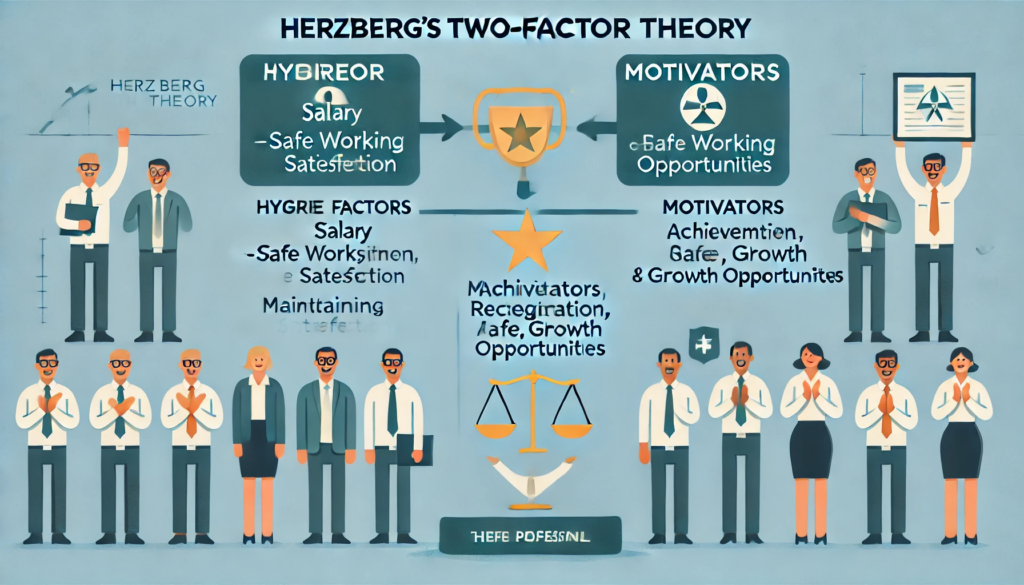
Here is the visual representation of Herzberg’s Two-Factor Theory, clearly depicting hygiene factors and motivators. Hygiene factors (safe working conditions, salary) maintain basic satisfaction, whereas motivators (achievement, recognition, growth opportunities) actively enhance motivation and employee engagement.