How does Environmental Ethics apply the approaches of Deontological Ethics, Teleological Ethics, and Virtue Ethics to ethical reasoning?
The correct answer and explanation is :
Environmental Ethics and Ethical Approaches
Environmental Ethics applies three major ethical approaches—Deontological Ethics, Teleological Ethics, and Virtue Ethics—to ethical reasoning by providing different frameworks for evaluating human responsibilities toward the environment.
- Deontological Ethics (Duty-Based Ethics)
- This approach, developed by Immanuel Kant, asserts that ethical actions are guided by moral duties and principles.
- In environmental ethics, deontology argues that humans have an inherent duty to protect the environment, regardless of the consequences. For instance, polluting rivers is wrong not because of its consequences, but because it violates a moral principle of respecting nature.
- Legal frameworks and environmental policies often reflect deontological ethics by imposing regulations on pollution and deforestation.
- Teleological Ethics (Consequentialism)
- This approach, particularly utilitarianism (by Jeremy Bentham and John Stuart Mill), evaluates actions based on their consequences.
- In environmental ethics, teleology argues that decisions should maximize overall environmental and social well-being. For example, preserving forests is good because it benefits biodiversity, reduces climate change, and supports human health.
- Cost-benefit analysis in environmental policies, such as reducing carbon emissions to prevent climate disasters, aligns with teleological reasoning.
- Virtue Ethics (Character-Based Ethics)
- This Aristotelian approach focuses on developing moral character traits such as responsibility, humility, and sustainability.
- In environmental ethics, virtue ethics encourages individuals and societies to cultivate virtues that promote environmental stewardship. For example, being a “good citizen” includes respecting and caring for nature.
- Personal lifestyle choices, like reducing waste, conserving energy, and supporting sustainable practices, reflect virtue ethics in environmental reasoning.
By integrating these approaches, environmental ethics provides a comprehensive moral framework for protecting the planet.
Here is an image illustrating these ethical perspectives applied to environmental ethics:
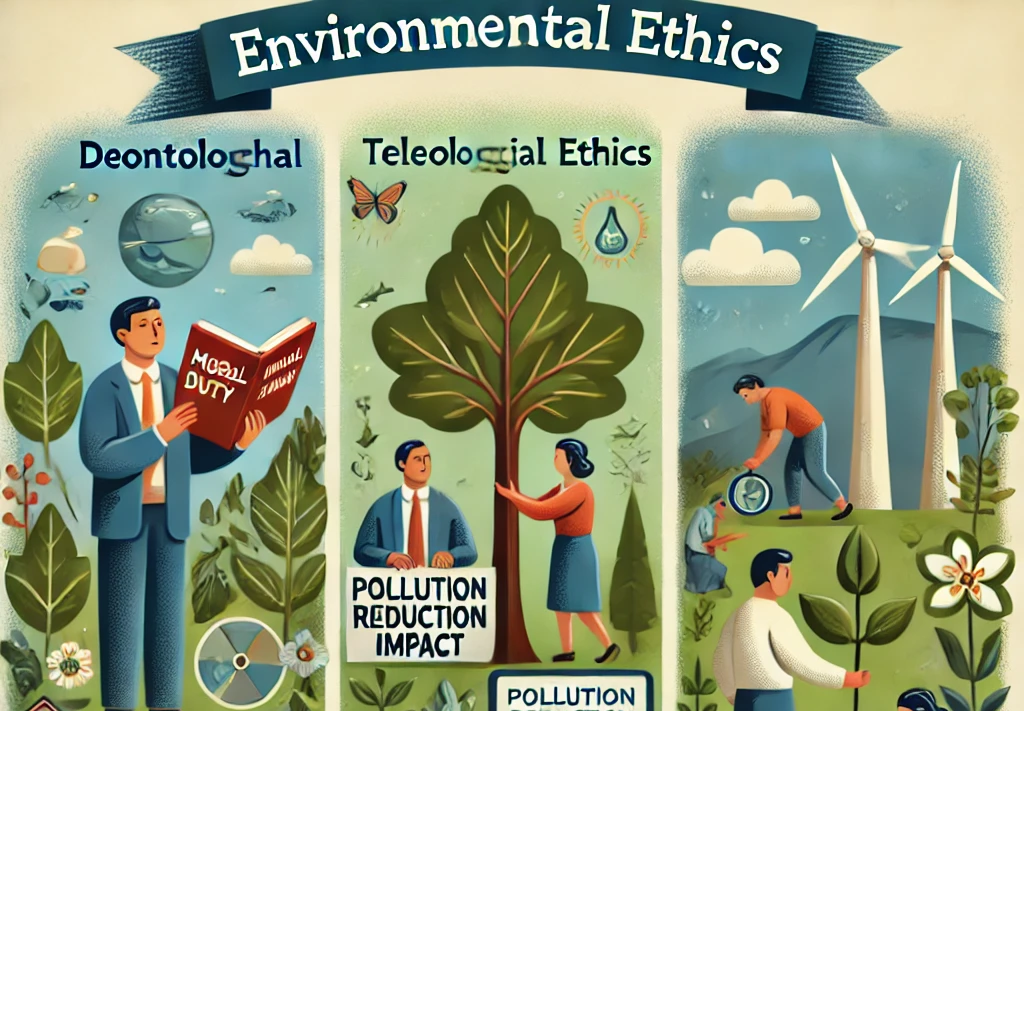
Here is an illustration representing the application of Deontological, Teleological, and Virtue Ethics in Environmental Ethics.