List the types of vegetation present in each biome. Explain how temperature and precipitation might influence the vegetation within each biome.
Biome Type:
Vegetation Types:
Temperature Influence:
Precipitation Influence:
The correct answer and explanation is :
Biome Types and Vegetation
1. Tropical Rainforest
- Vegetation Types: Tall trees, broadleaf trees, ferns, mosses, orchids, vines
- Temperature Influence: The tropical rainforest has a consistently warm temperature year-round (between 20–25°C). The warmth encourages rapid plant growth and a dense canopy, with plants adapted to thrive in warm conditions.
- Precipitation Influence: Rainfall is high (2000–10000 mm/year), occurring regularly throughout the year. The abundance of moisture supports the lush, dense vegetation, and allows epiphytes (plants that grow on others) to thrive.
2. Desert
- Vegetation Types: Cacti, succulents, shrubs, drought-tolerant grasses, xerophytes
- Temperature Influence: Deserts experience extreme temperature fluctuations, ranging from hot days to cold nights. High daytime temperatures (often exceeding 40°C) stress vegetation, leading to adaptations like water storage in thick stems and reduced leaf surfaces.
- Precipitation Influence: Precipitation is low, typically under 250 mm per year. This scarcity of water results in sparse vegetation that can survive long periods of drought.
3. Temperate Deciduous Forest
- Vegetation Types: Oak, maple, beech, birch, hickory, ferns, mosses, shrubs
- Temperature Influence: The temperate forest experiences a wide range of temperatures with cold winters and warm summers (0°C to 30°C). The vegetation is adapted to survive through cold winters and seasonal growth cycles.
- Precipitation Influence: Precipitation is moderate (750–1500 mm/year) and distributed evenly throughout the year, supporting a variety of plant species that shed their leaves in winter to conserve water.
4. Savanna
- Vegetation Types: Grasses, scattered trees (acacias, baobabs), shrubs
- Temperature Influence: Savannas are warm year-round, with temperatures ranging from 20–30°C. The warm climate supports grasslands with a few drought-resistant trees.
- Precipitation Influence: Precipitation is seasonal, with distinct wet and dry seasons. The wet season allows grasses and some trees to thrive, while the dry season forces many plants to conserve water.
5. Tundra
- Vegetation Types: Mosses, lichens, small shrubs, grasses, dwarf trees
- Temperature Influence: The tundra has extremely cold temperatures, often below 0°C, especially in winter. The cold limits plant growth, resulting in short growing seasons.
- Precipitation Influence: Precipitation is low (200–600 mm/year), mostly as snow, which limits the vegetation. However, plants have adapted to withstand frost and cold, growing close to the ground to conserve heat.
Explanation
Temperature and precipitation are the two primary climatic factors influencing the vegetation in each biome. In warm and moist conditions, such as those in tropical rainforests, plants are able to grow year-round, leading to a lush, dense canopy of large trees. Conversely, in cold or dry environments like deserts and tundras, vegetation must be adapted to extreme conditions, whether through water storage or the ability to survive low temperatures.
In regions with high precipitation and moderate temperatures, such as temperate forests, plants can grow throughout the year, but they must adapt to seasonal changes, such as shedding leaves in winter. Savannas, with their seasonal precipitation, support grasses that thrive during the wet season, but during the dry season, plants enter dormancy to conserve water.
Vegetation types are also influenced by how much moisture is available throughout the year. High rainfall in tropical rainforests encourages epiphytes and large trees, while low rainfall in deserts leads to the dominance of drought-resistant plants like cacti.
Biomes with vegetation types.
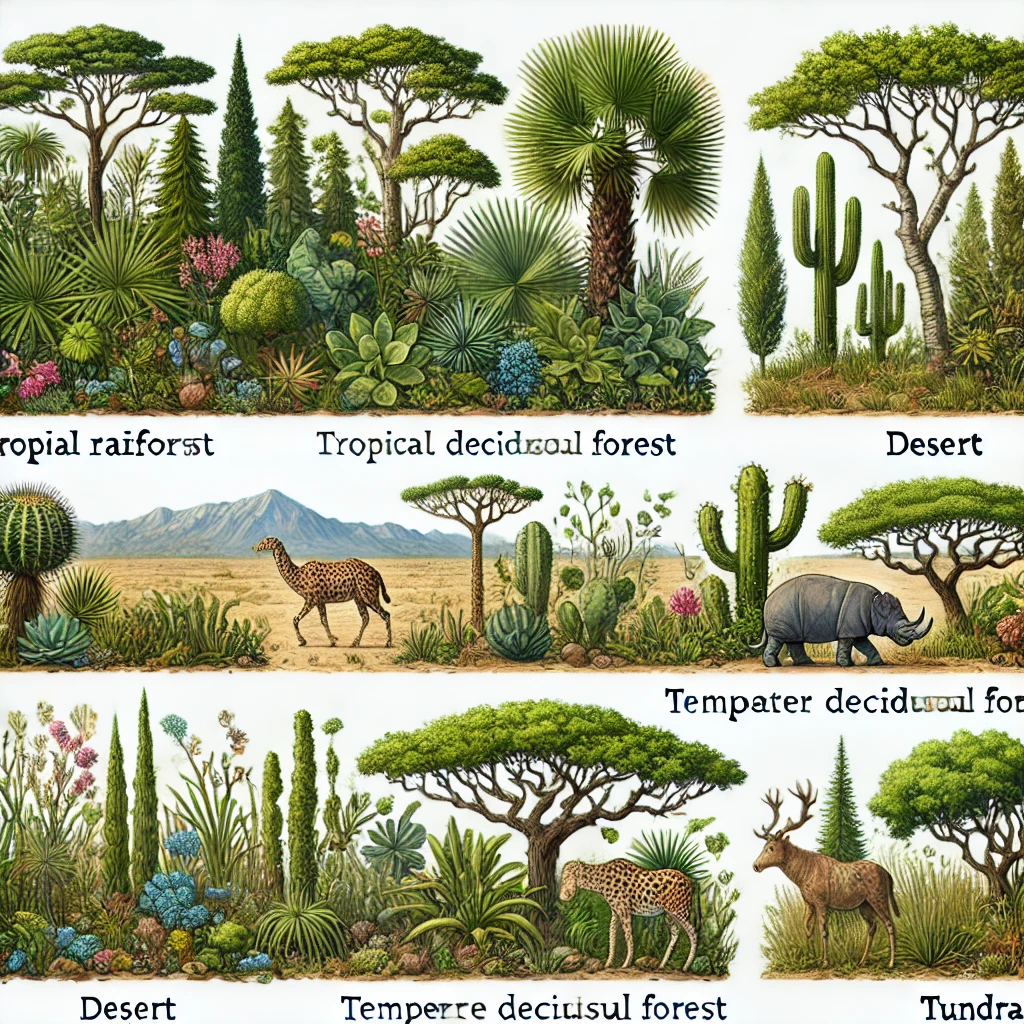
Here is an illustration showcasing the various biomes with their vegetation types. It visually contrasts the different vegetation types and how temperature and precipitation influence each biome.