Which of the following is an example of benevolent sexism toward men?
negative feelings toward feminine men
resentment toward men who are arrogant and power-hungry
stereotypes of men as warm and caring
beliefs that men ought to be cared for domestically by women
The correct answer and explanation is :
The correct answer is “beliefs that men ought to be cared for domestically by women.”
Explanation:
Benevolent sexism is a form of sexism that appears to be positive or protective but still enforces traditional gender roles and stereotypes. It differs from hostile sexism, which is overtly negative and antagonistic toward a particular gender. Benevolent sexism toward men involves attitudes or behaviors that, while seemingly positive or nurturing, reinforce traditional gender roles that are limiting for men and perpetuate the notion that men are weaker or in need of female support.
The belief that “men ought to be cared for domestically by women” is an example of benevolent sexism because it suggests that men are incapable of fulfilling domestic responsibilities or that their needs should be primarily met by women. This reinforces traditional gender roles where men are seen as the “breadwinners” or external providers, while women are expected to stay at home and care for the family. Although this belief may sound nurturing or protective, it ultimately positions men in a passive role and limits their autonomy, thus reinforcing gender inequality.
The other options are not examples of benevolent sexism toward men:
- Negative feelings toward feminine men reflects a form of hostile sexism, as it involves disliking men who deviate from traditional masculine norms.
- Resentment toward men who are arrogant and power-hungry is a critique of particular behaviors, not a gender-based stereotype.
- Stereotypes of men as warm and caring would be a positive stereotype of men, but it doesn’t carry the same traditional gender role expectations as benevolent sexism, which often involves a sense of dependency or vulnerability placed on men.
Benevolent sexism, therefore, emphasizes idealized protection and caregiving roles that undermine the independence and equality of both genders.
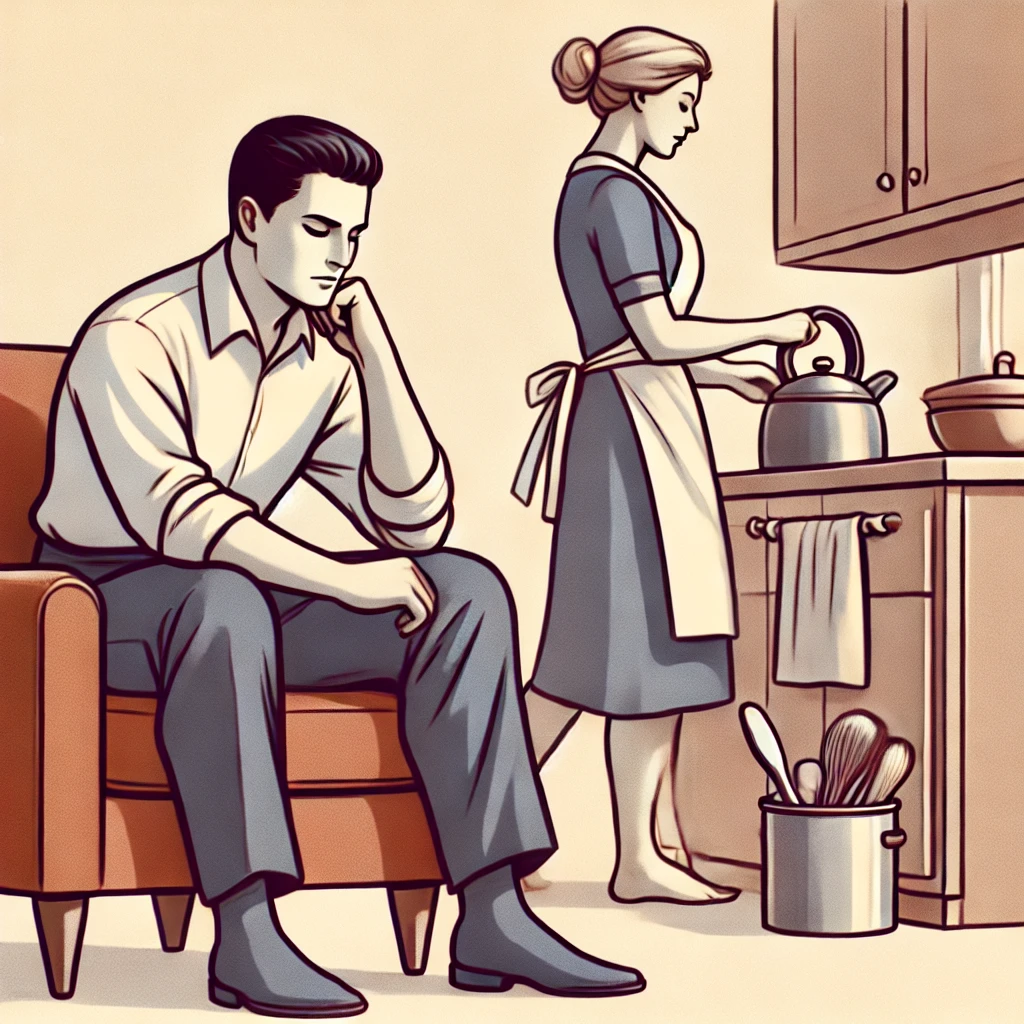
Here is the image illustrating the concept of benevolent sexism, where the man is passively cared for by the woman in a traditional domestic setting. This visual representation reflects how such beliefs can undermine gender equality by enforcing specific roles based on outdated stereotypes.