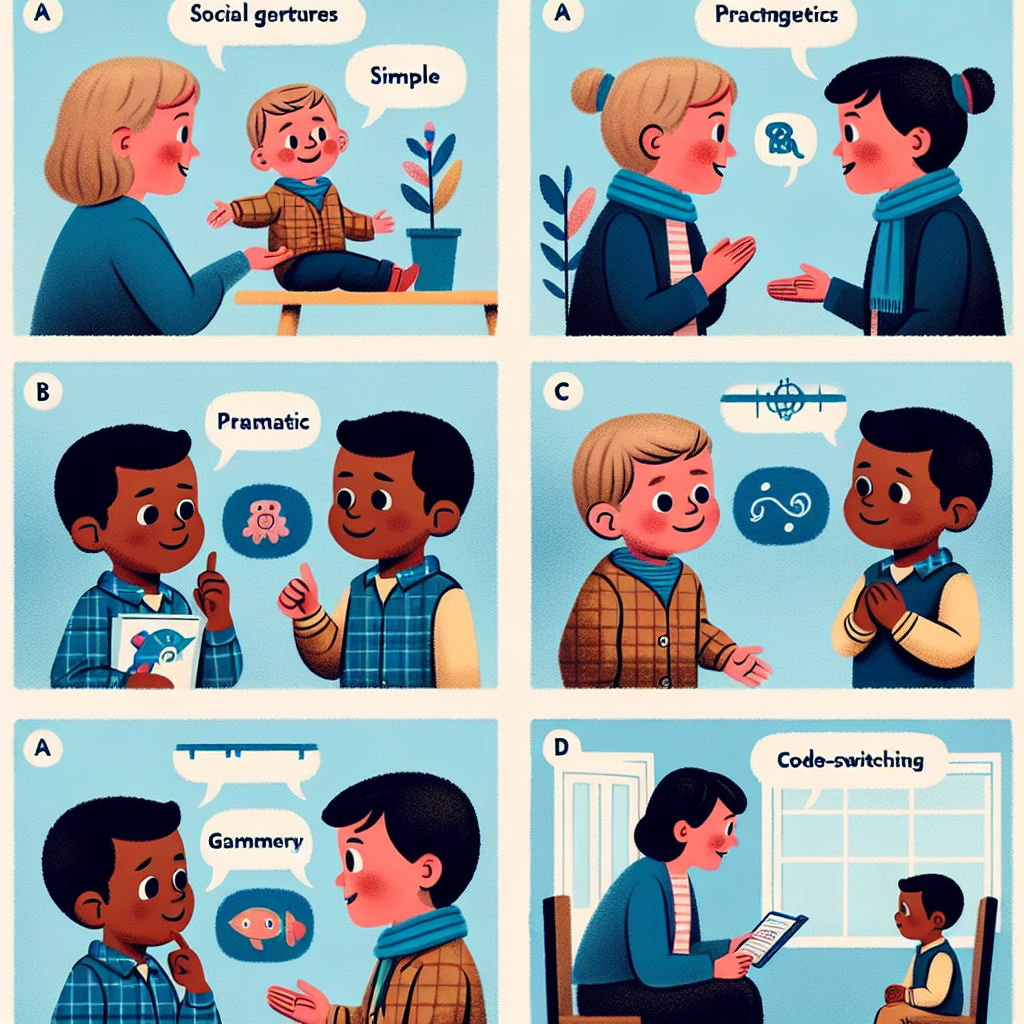
Chaim, age 4, speaks differently to their baby brother than to their teacher. This indicates that Chaim understands some of the practical uses of language. Chaim is developing an understanding of:
a. social gestures.
b. pragmatics.
c. grammar.
d. code-switching.
The correct answer and explanation is :
The correct answer is b. pragmatics.
Pragmatics refers to the use of language in social contexts and understanding the practical aspects of communication, including how language is used in different situations, for different audiences, and with different purposes. In this case, Chaim is adjusting his speech based on who he is speaking to—his baby brother versus his teacher. This demonstrates that Chaim is aware that different situations require different forms of communication, which is a key element of pragmatics.
Pragmatics involves understanding the social rules governing language use, such as tone, politeness, formality, and context. For example, speaking to a baby brother may involve using simpler language, a softer tone, or more playful expressions, while speaking to a teacher might involve more formal language, complete sentences, and respectful speech. This adjustment in communication style is a fundamental part of pragmatic development.
This ability typically develops as children grow older and gain more social experiences, allowing them to navigate various social situations more effectively. By age 4, children like Chaim are already learning how to use language not just to convey information, but to build and maintain social relationships, to fit in with cultural norms, and to fulfill specific social roles (such as a student or a sibling).
While the other options relate to different aspects of language development, they are not as fitting for this scenario:
- a. Social gestures would refer to non-verbal communication, like waving or nodding, which is not the focus here.
- c. Grammar involves rules of sentence structure and word usage, which Chaim is likely also learning, but this situation is more about social usage.
- d. Code-switching refers to changing language or dialect based on the context, which is similar but more specific to switching between languages or dialects rather than adjusting tone or style based on the audience.
Thus, the best term for what Chaim is demonstrating is pragmatics.