Critics of advertising argue that in some markets advertising may a. attract products of lower quality into the market. b. attract less informed buyers into the market. c. decrease elasticity of demand allowing firms to charge a larger markup over marginal cost. d. enhance competition in markets to an unnecessary degree.
The correct answer and explanation is :
The correct answer is c. decrease elasticity of demand allowing firms to charge a larger markup over marginal cost.
Explanation:
Advertising plays a significant role in shaping demand and consumer behavior. Critics of advertising argue that in some markets, it can distort consumer perceptions and reduce the price sensitivity (or elasticity) of demand for products. When a company heavily advertises its product, it creates a sense of brand loyalty, differentiation, and emotional connection with consumers. As a result, the demand for that product becomes less elastic — meaning consumers are less responsive to price changes. They may continue purchasing the product even if its price increases, because the advertising has created an attachment to the brand or product.
This reduction in demand elasticity allows firms to charge higher prices than they otherwise could if consumers were more price-sensitive. Essentially, the firm can mark up the price above the marginal cost of production, making higher profits. This is often seen in markets where strong brands and advertising campaigns dominate, such as in the luxury goods market or the soft drink industry. In these markets, consumers may be willing to pay premium prices due to the psychological effects of advertising, which leads to higher markups.
Here are the main points contributing to this argument:
- Brand Loyalty: Advertising can create a perception of superiority, even if the product is not significantly better than alternatives. This leads to less sensitivity to price changes.
- Consumer Perception: Through extensive advertising, companies can convince consumers that their products are unique or desirable, thus reducing competition and making price a less important factor.
- Higher Markups: With less price sensitivity, companies have greater flexibility in pricing, leading to higher profits.
Thus, critics argue that advertising can reduce price competition, allowing firms to charge larger markups, which may not reflect the true value of the product.
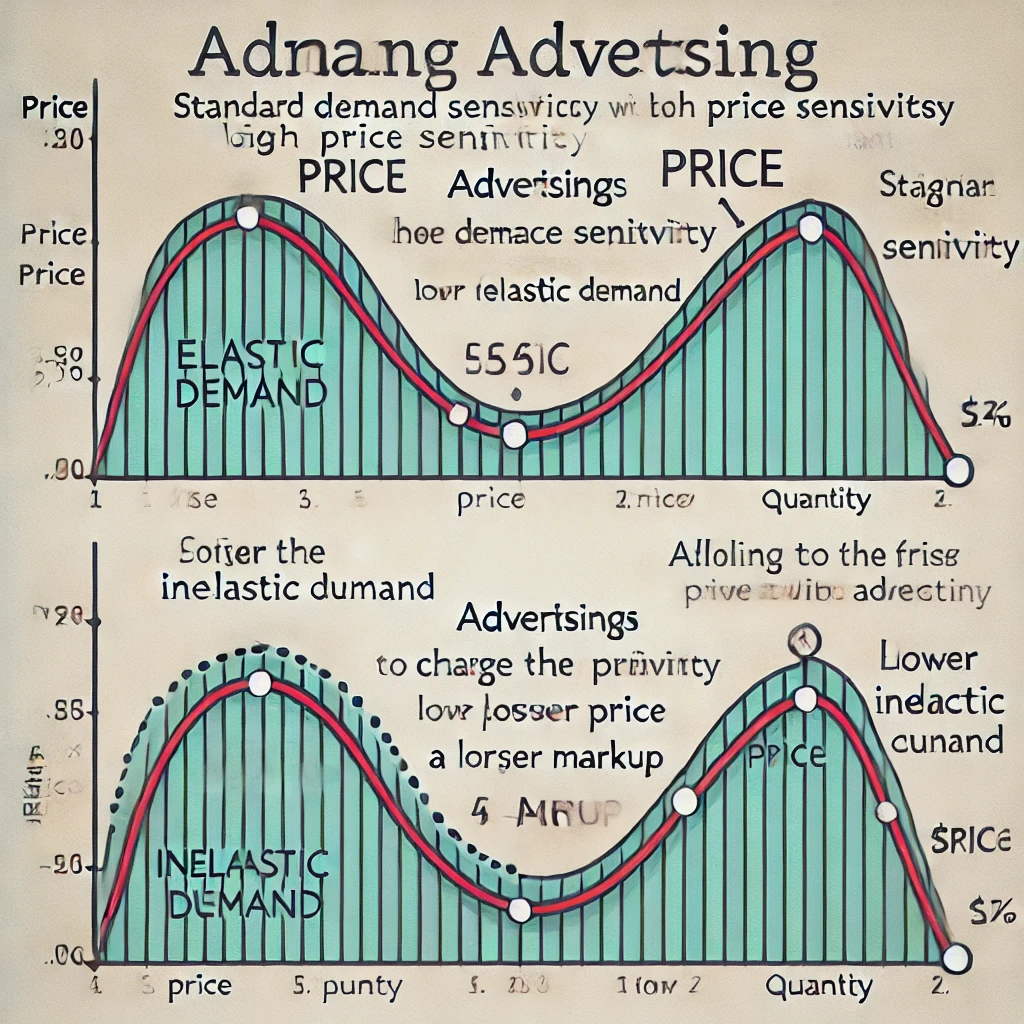
Here is a diagram that visually explains how advertising affects demand elasticity in markets. The curve shifts from a more elastic demand (where price changes significantly affect quantity demanded) to a less elastic one due to the effects of advertising. This reduced price sensitivity allows firms to charge higher prices and achieve a larger markup over marginal cost.