The definition of lysogeny is
A) the period during replication
B) when virions are not present.
C) lysis of the host cell due to a phage
D) phage DNA is incorporated into host cell DNA.
E) attachment of a phage to a cell.
The correct answer and explanation is :
The correct answer is D) phage DNA is incorporated into host cell DNA.
Explanation:
Lysogeny is a viral life cycle in which a bacteriophage (a virus that infects bacteria) integrates its genetic material into the genome of the host cell. The phage DNA (also known as a prophage when integrated) becomes a part of the bacterial chromosome and remains dormant, rather than immediately causing the destruction (lysis) of the host cell. This integration can persist for many generations, as the host cell divides and passes on the phage DNA to its progeny.
During this phase, the virus does not produce new virions (virus particles), and the host cell continues to function normally, replicating and dividing. This contrasts with the lytic cycle, in which the phage replicates rapidly, ultimately causing the host cell to lyse and release new viral particles. Lysogeny can be triggered by various environmental factors, and under certain conditions, the prophage can exit the bacterial chromosome and enter the lytic cycle, where it will start replicating and eventually cause cell death.
Lysogeny plays a significant role in the spread of genetic material, particularly in bacteria. This phenomenon can provide the host bacteria with genetic advantages, such as immunity to certain phages or the introduction of new genes (like toxin genes), which may enhance the bacterium’s survival.
Key Steps in Lysogeny:
- Phage Attachment and Entry: The phage attaches to a bacterial cell and injects its DNA.
- Integration: The viral DNA is integrated into the bacterial genome.
- Replication: As the bacterial cell divides, the integrated phage DNA is replicated along with the host DNA, spreading the viral genetic material to daughter cells.
This phenomenon was first described in detail by André Lwoff in 1950, and it remains a key concept in virology and microbiology.
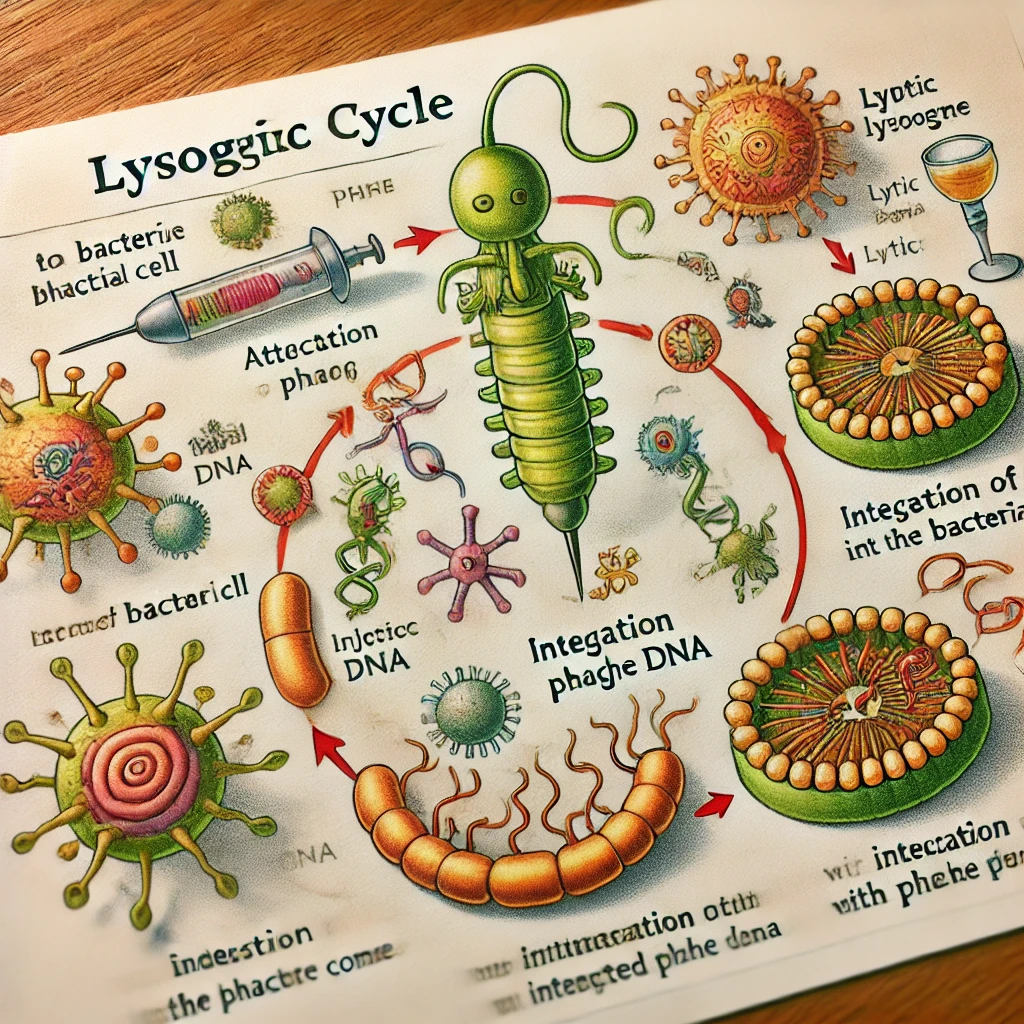
Here is a diagram illustrating the lysogenic cycle of a bacteriophage. It shows the key steps, including phage attachment, DNA injection, integration into the host genome, and replication of the host cell with the integrated viral DNA. This diagram helps visualize how lysogeny occurs and differentiates it from the lytic cycle.