If you could ask Martin Luther King 3 questions what would you ask and why? Provide explanation and answer to own question. Provide brief examples for consideration.
The correct answer and explanation is :
If I had the opportunity to ask Dr. Martin Luther King Jr. three questions, they would be:
1. What kept you hopeful in the face of constant adversity?
Why this question?
Dr. King faced immense challenges, including threats to his life, imprisonment, and opposition from both the government and the public. Despite this, he remained hopeful and committed to his vision of justice. Understanding what fueled his resilience can provide guidance for those facing modern struggles.
Answer:
Dr. King’s hope was rooted in his faith, belief in nonviolent resistance, and the undeniable moral force behind the civil rights movement. He saw injustice as temporary and believed love and justice would ultimately prevail.
Example:
Even after the bombing of his home in 1956, he urged his followers not to retaliate with violence but instead continue their peaceful protests.
2. How do you think modern movements for justice can stay unified?
Why this question?
Social justice movements today often struggle with division and internal conflict. Learning from King’s leadership could provide insights into how to maintain unity and effectiveness.
Answer:
Dr. King would likely emphasize the need for a shared vision, disciplined nonviolence, and inclusive leadership. He knew that division could weaken the fight for justice.
Example:
The Selma-to-Montgomery marches in 1965 were successful because King united different groups under a single goal: voting rights for Black Americans.
3. If you could see today’s America, what would you say to young activists?
Why this question?
Dr. King’s dream was for an America where equality and justice prevailed. His perspective on progress would be valuable to today’s activists.
Answer:
King would acknowledge progress (such as the Civil Rights Act), but he would remind activists that the fight against racism, economic injustice, and inequality is not over. He would urge them to continue pushing for systemic change.
Example:
He often said, “The arc of the moral universe is long, but it bends toward justice,” meaning that persistent efforts eventually lead to justice.
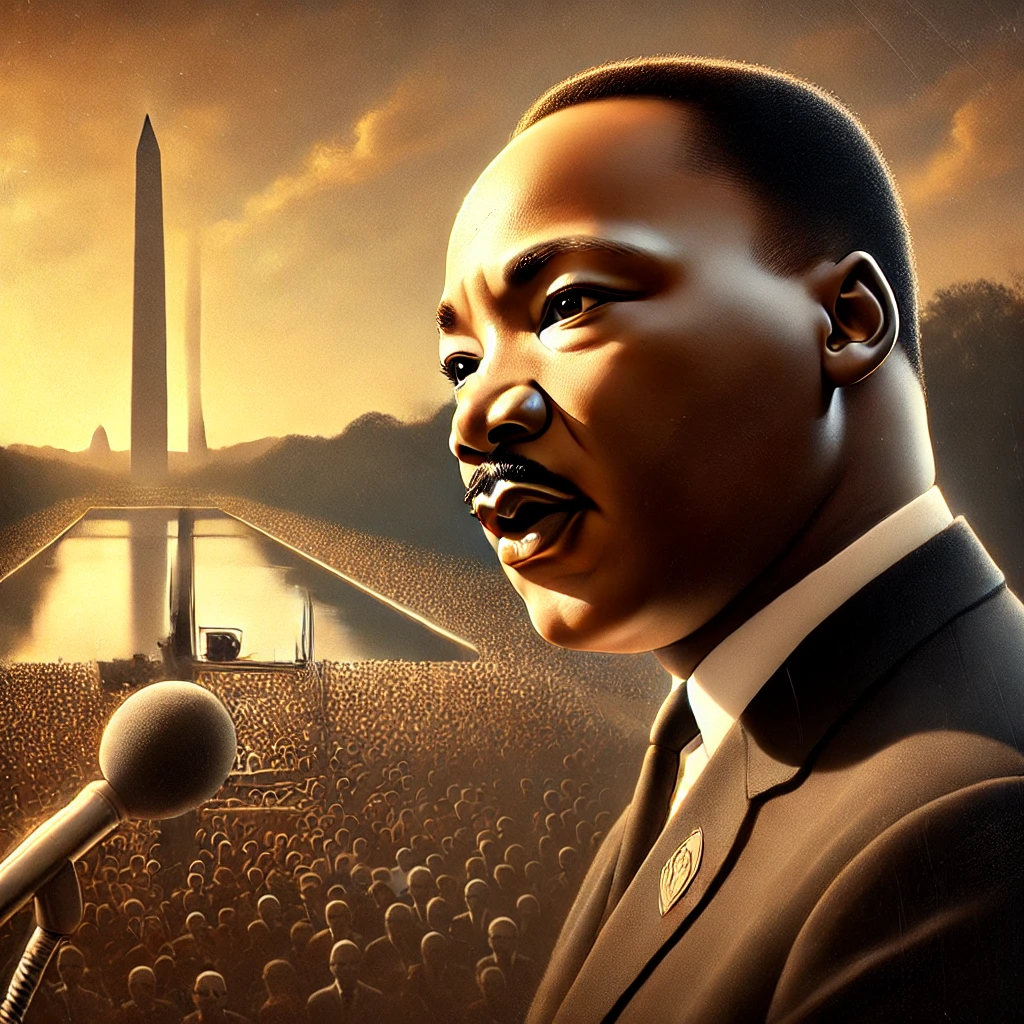
Here is an artistic representation of Dr. Martin Luther King Jr. delivering his iconic speech.