A researcher’s membership on an advisory board with an organization sponsoring research can create a COI because:
It may be difficult for the researcher to appear neutral, as the researcher may have an interest in the research’s success.
The members of the advisory board know each other.
The organization can have policies that affect the research.
The research result could be flawed from missing data.
The correct answer and explanation is :
Correct Answer:
It may be difficult for the researcher to appear neutral, as the researcher may have an interest in the research’s success.
Explanation:
A conflict of interest (COI) arises when a researcher has a financial or personal interest that could compromise their objectivity in conducting or presenting research. One common source of COI is when a researcher serves on an advisory board of an organization that is also funding the research.
Being on an advisory board means the researcher has a formal relationship with the sponsoring organization. This could lead to a bias—whether intentional or subconscious—in how they design, conduct, analyze, or report the research. The researcher might feel pressured to produce favorable results to maintain a good relationship with the sponsor, secure future funding, or advance their career. Even if the researcher acts with full integrity, the perception of bias can still damage the credibility of the research.
This situation differs from the incorrect answers:
- “The members of the advisory board know each other.” While familiarity among board members can exist, it does not inherently create a COI related to research.
- “The organization can have policies that affect the research.” While organizations have policies, this alone does not create a COI. The issue is the researcher’s direct involvement with the organization.
- “The research result could be flawed from missing data.” Data issues can occur for many reasons, but they are not directly tied to a researcher’s role on an advisory board.
To maintain ethical standards, researchers must disclose conflicts of interest and, in some cases, recuse themselves from certain decisions to ensure unbiased research.
Image:
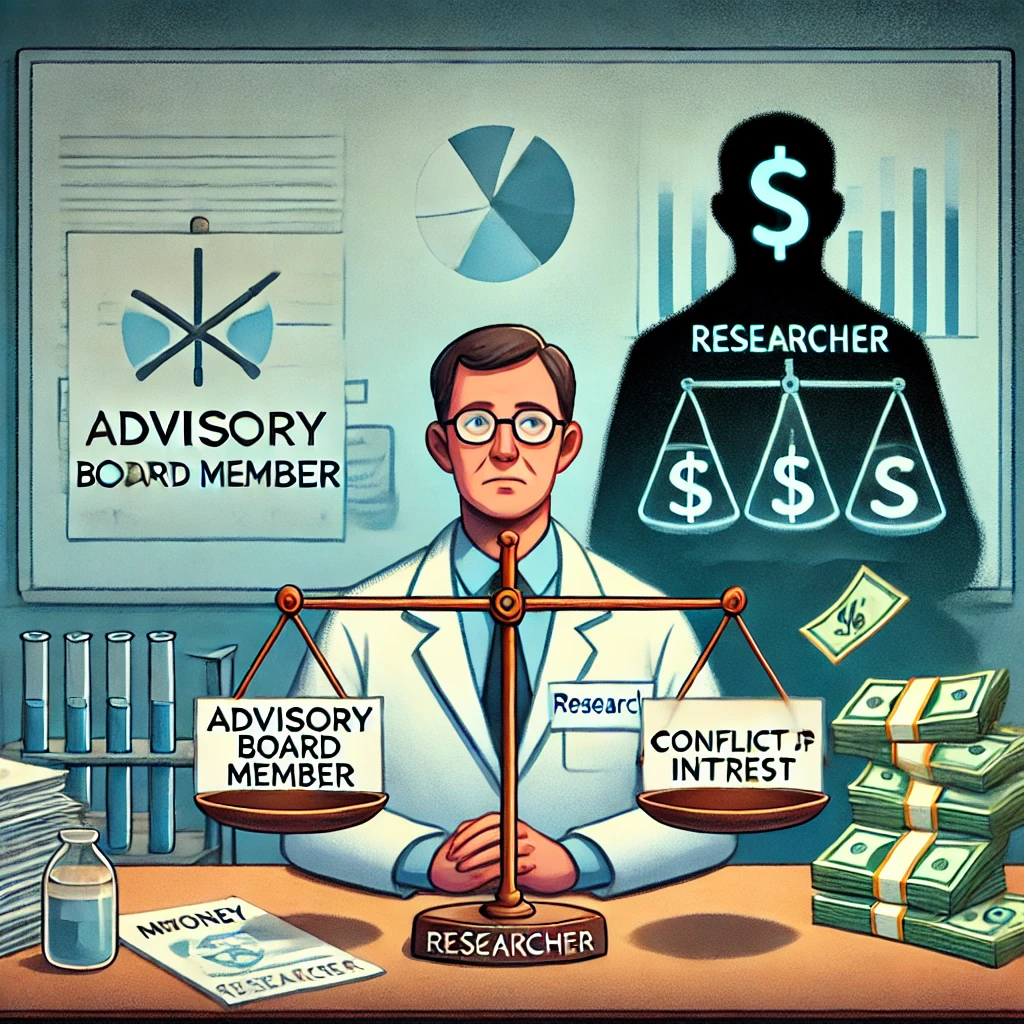
Here is an illustration representing the conflict of interest scenario in research.