Cost behavior refers to
a. how costs react to a change in the level of activity
b. whether a cost is incurred in a manufacturing, merchandising, or service company
c. classifying costs as either inventoriable or period costs
d. whether a particular expense has been ethically incurred
The correct answer and explanation is :
Correct Answer:
a. how costs react to a change in the level of activity
Explanation:
Cost behavior refers to the way costs change in response to variations in activity levels within a business. It is a fundamental concept in managerial accounting that helps businesses forecast expenses, set budgets, and make pricing decisions.
There are three primary types of cost behavior:
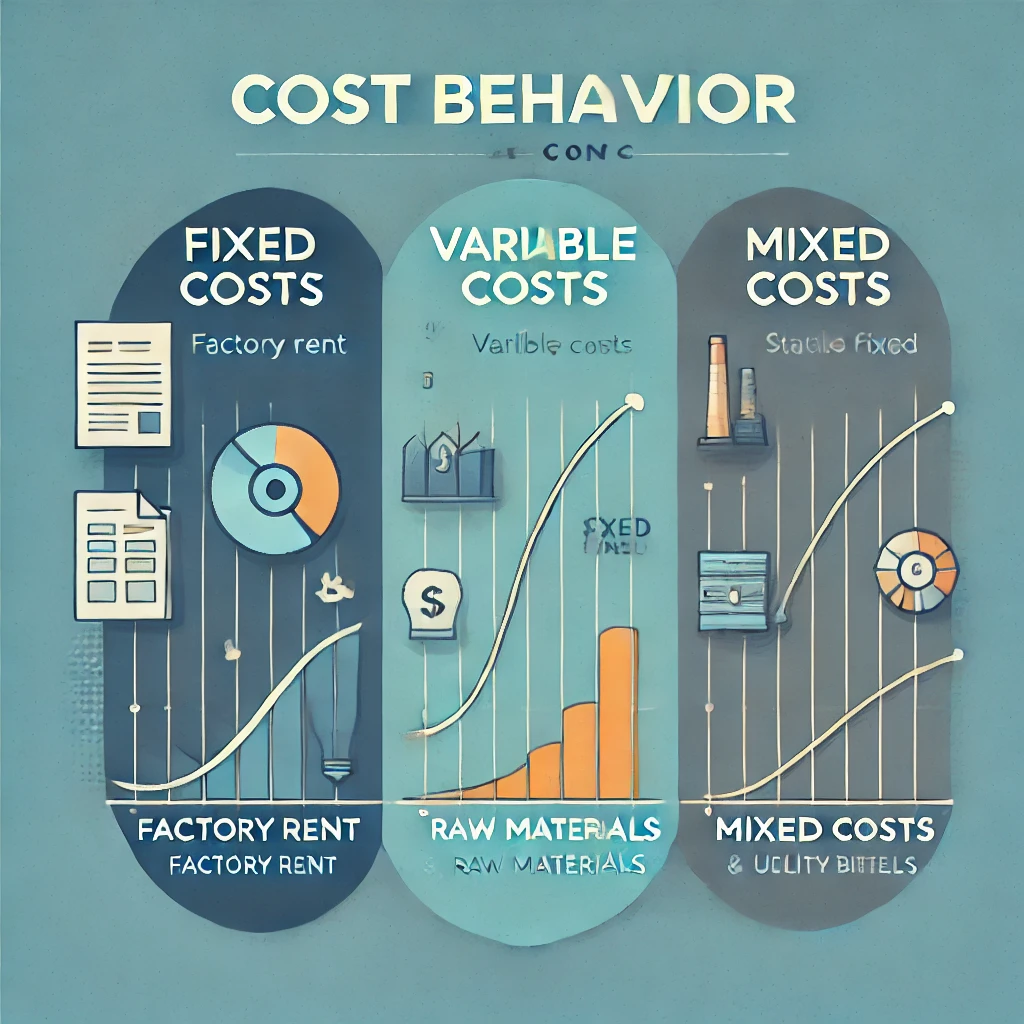
- Fixed Costs – These costs remain constant regardless of changes in activity levels. Examples include rent, salaries, and insurance. Even if production increases or decreases, fixed costs remain unchanged within a relevant range.
- Variable Costs – These costs change in direct proportion to activity levels. If production or sales increase, variable costs increase, and if production decreases, variable costs decrease. Examples include raw materials, direct labor, and sales commissions.
- Mixed Costs – These costs have both fixed and variable components. A common example is utility costs, which may have a base charge (fixed) and a usage-based charge (variable).
Understanding cost behavior helps businesses in decision-making processes such as cost control, profitability analysis, and break-even analysis. By identifying how costs react to different levels of production or sales, managers can better predict expenses and improve financial performance.
In summary, cost behavior describes how different types of costs respond to changes in business activity. Properly analyzing cost behavior allows companies to optimize resource allocation and maximize profitability.