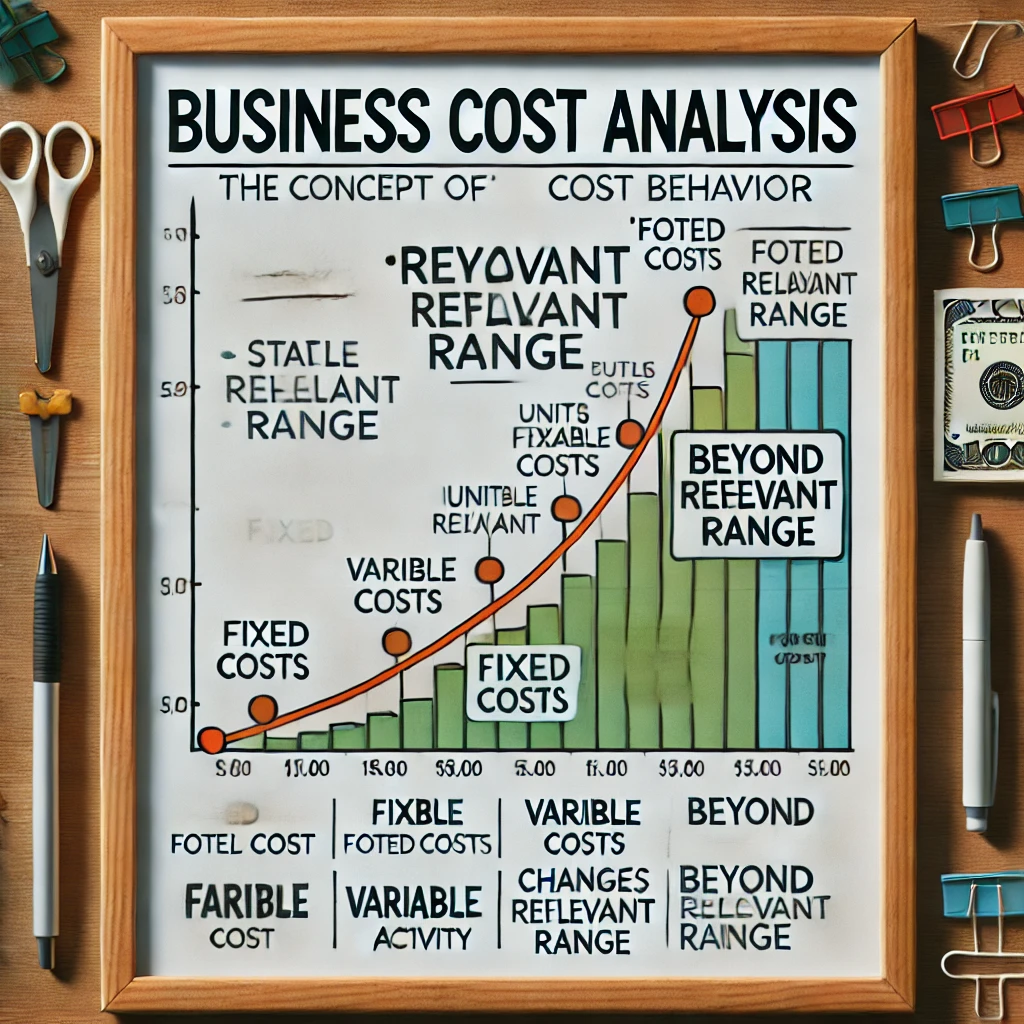
The relevant range is useful for analyzing cost behavior for management decision-making purposes.
The correct answer and explanation is :
Correct Answer:
The relevant range is the range of activity within which a company’s fixed and variable costs remain consistent. It is useful for analyzing cost behavior in management decision-making because cost assumptions hold true only within this range.
Explanation (300 words):
In cost accounting, the relevant range is the level of activity where cost behavior patterns (fixed and variable costs) remain valid. Beyond this range, cost behavior may change due to factors like increased capacity requirements, additional labor, or new operational constraints.
Why is the Relevant Range Important?
- Accurate Cost Predictions
Businesses use cost behavior analysis to predict expenses at different production levels. If production moves beyond the relevant range, fixed costs might increase due to the need for additional facilities or workforce. - Managerial Decision-Making
Managers use cost behavior assumptions to set budgets, determine pricing, and plan production. If decisions are based on cost data outside the relevant range, they may be misleading. - Fixed and Variable Cost Behavior
- Fixed costs (e.g., rent, salaries) remain unchanged within the relevant range. If production exceeds this range, these costs may increase (e.g., leasing another factory).
- Variable costs (e.g., raw materials, direct labor) change proportionally with production levels but may fluctuate beyond the relevant range due to bulk purchasing discounts or labor inefficiencies.
- Break-even Analysis & Profit Planning
Businesses analyze the relevant range to determine break-even points and profit margins. If a company operates beyond this range, cost structures may change, affecting profitability. - Capacity Planning
The relevant range helps companies assess when to expand production capacity. Operating above the range may require capital investments in machinery, hiring additional workers, or expanding facilities.
Thus, understanding the relevant range is essential for accurate cost estimation, effective decision-making, and strategic planning.
Image: